
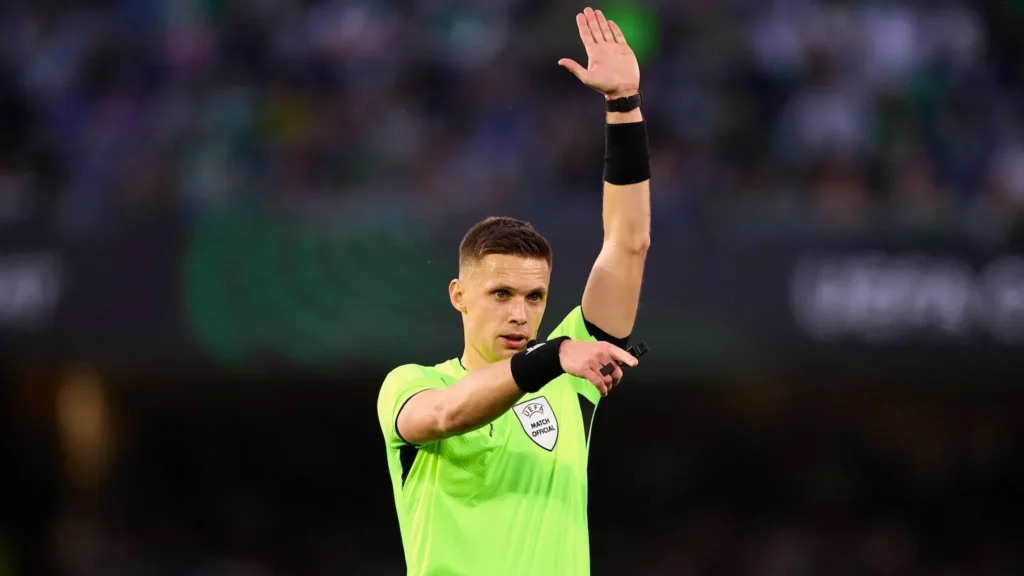
Modern football is no longer judged only by goals, tactics and star moments. More than ever, matches are shaped by how referees control tempo, manage pressure and apply the Laws in moments that can change everything. That is why IFAB’s latest decisions feel so important. The game’s lawmakers have approved a series of referee-driven changes that are designed to reduce time-wasting, improve match flow and give VAR more precise powers in key situations. For a sport constantly debating consistency and authority, this is a major moment.
The headline change is simple, visible and likely to become controversial very quickly: referees can now use a five-second visual countdown for delayed throw-ins and goal kicks. If the restart is still not taken by the end of that countdown, possession can be flipped on a throw-in, while a delayed goal kick can lead to a corner for the opposition. That means referees are being given a stronger public tool to punish passive delay, not just warn against it. It also means players, coaches and fans will instantly see when a referee believes time is being wasted.
Another important shift is how substitutions and stoppages will be controlled. A substituted player must leave the field within 10 seconds, or the replacement will have to wait until the first stoppage after one minute of running time. On top of that, when a player receives on-field treatment or causes play to stop for an injury assessment, that player must stay off the field for one minute after the restart. These are not small adjustments. They are referee-centered tools aimed at restoring rhythm and removing some of the tactical pauses that slow major matches down.
VAR is also being widened in ways that matter directly to referee credibility. Under the approved changes, VAR can now help in cases of a clearly incorrect second yellow leading to a red card, mistaken identity when the wrong team is penalised and the wrong player is carded, and, as a competition option, a clearly incorrectly awarded corner kick if the review can be completed immediately without delaying the restart. This is a meaningful development because it pushes VAR slightly deeper into corrective refereeing without fully opening the door to endless intervention.
There are also several lawbook changes that will matter to analysts and referee observers. The 2026/27 edition of the Laws will formally include the earlier clarification on the accidental double touch at penalties, allow referee body cameras as a competition option, and clarify that when a referee plays advantage for an offence that would otherwise be DOGSO, the offending player is not cautioned if a goal is still scored because the offence did not actually prevent the goal. These details may sound technical, but they shape how the game is explained, judged and defended after high-pressure incidents.
For referee analysis websites, this is exactly the kind of topic that works. It is current, debate-friendly and educational at the same time. It lets you explain not just what changed, but what referees will actually have to do differently on the pitch. Fans do not only want controversy anymore; they want clarity. A strong post on these changes can position The Var Verdict as a place that explains the game before the next storm arrives.
The Var Verdict: these new rules will not remove controversy, but they should make certain types of refereeing more visible and more accountable. The biggest test will not be the wording of the laws. It will be consistency. If one referee starts the countdown early, another waits too long, and a third avoids using it altogether, the debate will only shift shape. But if these tools are applied firmly and uniformly, football may become slightly faster, clearer and fairer.

0 Comments
Join the conversation with respect. Comments are moderated and must follow our community rules.
Want to join the discussion?
Please log in or create an account to comment and reply. This keeps the conversation cleaner and safer.