
What VAR changes are actually coming in 2026/27
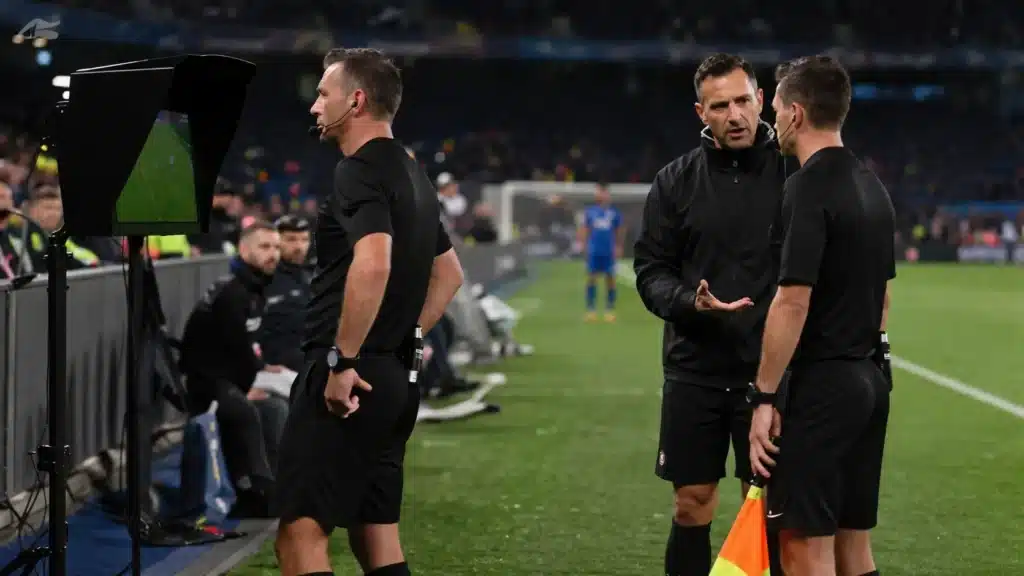
The VAR changes 2026/27 are finally official, and the biggest takeaway is this: football has not rewritten the entire review system, but it has opened three new doors for intervention. IFAB approved the changes at its 140th Annual General Meeting, said they will be used at the 2026 World Cup, and confirmed that the 2026/27 Laws take effect from 1 July 2026, with competitions starting before then allowed to adopt them earlier.
Quick Verdict
This is a meaningful VAR expansion, but not a revolution. The new protocol gives officials more room to correct a few ugly, match-shaping errors, especially wrongful second-yellow dismissals and obvious corner mistakes, without turning every disputed decision into a review.
Why VAR can intervene more in 2026/27
The reason VAR can intervene more often next season is simple: IFAB has formally widened the list of reviewable incidents. Until now, the system was built around goals, penalties, direct red cards and mistaken identity in a narrower sense. From 2026/27, the protocol explicitly adds clearly incorrect second cautions that produce a red card, expands mistaken-identity correction where a yellow or red is shown to the wrong player, and gives competitions the option to correct clearly wrongly awarded corner kicks if that can be done immediately.
Law context
The crucial detail is that IFAB still frames VAR around the same core idea: intervention only for a clear and obvious error or a serious missed incident. In other words, the system is being stretched, but not thrown open. That matters, because many fans will hear “new VAR rules” and assume more checks on every subjective foul. That is not what the law says.
The first major change: clearly incorrect second yellow cards
This is the headline change most people will notice first. VAR will now be able to step in when a player is sent off because of a clearly incorrect second caution. That matters because a second yellow ends in a red and can change a match just as dramatically as a straight dismissal. IFAB’s wording is careful here: this is not an invitation to re-referee every yellow card. It is about obvious mistakes that result in a sending-off.
That should close one of the most frustrating loopholes in the old protocol. Under the previous structure, a plainly wrong second booking could still survive because it was technically “not a direct red.” From 2026/27, that gap is no longer there.
The second major change: mistaken identity gets broader
IFAB has also clarified that mistaken identity can now be corrected when the referee shows a yellow or red card to the wrong player after penalising the offence. Just as importantly, the law says the identity of the offender can be reviewed, but not the offence itself, unless that offence already falls into a goal, penalty or direct-red category. That is a very important limit.
So yes, VAR can help when the wrong player is punished. No, VAR does not suddenly get full freedom to re-open every cautionable incident just because the wrong name went into the book first.
The third major change: corner kicks can be reviewed — but only in a very narrow way
This one will get attention because it sounds bigger than it really is. Competitions may now allow VAR to review a clearly incorrectly awarded corner kick, including situations where the ball actually went out over the touchline rather than the goal line. But the decision must be corrected immediately and without delaying the restart. If the corner is taken quickly, the chance is gone.
That restriction matters. IFAB is not inviting long forensic pauses over every deflection. This is a safety valve for the obvious howler, not a green light for microscopic ball-tracking every time a defender and attacker both appeal.
What is not changing
This is where the conversation needs calming down a little. The VAR changes 2026/27 do not mean the system can suddenly review ordinary yellow cards, minor fouls in midfield, every possible corner sequence, or all subjective contact. The basic philosophy remains minimal interference. The list is bigger, but it is still a list.
That is probably the right balance. Football needed a fix for a few glaring blind spots, but it did not need VAR turning into a rolling legal seminar. The sport still works best when the referee makes the game breathe and the video room only steps in for the truly damaging error. This is an inference from the way IFAB has drafted the changes and preserved the “clear and obvious” threshold.
Wider 2026/27 law changes worth knowing about
Even though the focus here is video review, the wider 2026/27 package is also important. IFAB has approved anti-time-wasting measures including five-second visual countdowns for delayed throw-ins and goal kicks, a ten-second exit requirement for substituted players, and a one-minute off-field period for players whose injuries stop play. It also approved body cameras as a competition option, clarified dropped-ball possession, and removed the caution in DOGSO situations when advantage is played and a goal is scored.
Final verdict
The clean verdict is that IFAB has made VAR a little smarter, not a lot bigger. The three new intervention areas all target moments that can badly distort a match: a wrongful second-yellow dismissal, a wrongly punished player, and the obvious corner error that nobody in the stadium can understand. Fans may still dislike VAR, but these are changes with a clear internal logic. Football’s challenge now is not just applying them — it is applying them quickly and consistently enough that the cure does not create a fresh problem of its own.
FAQ
When do the VAR changes 2026/27 start?
The new Laws of the Game take effect from 1 July 2026, although competitions starting before that date may adopt them earlier, and IFAB has said the approved measures will be in place for the 2026 World Cup.
Can VAR now review second yellow cards?
Yes, but only where there is clear evidence of a clearly incorrect second caution that results in a red card. This is not a general review of all yellow cards.
Can VAR review corner kicks in every competition?
No. IFAB made that a competition option, and only for a clearly wrongly awarded corner that can be corrected immediately without delaying the restart.
Can VAR use mistaken identity to re-review the whole offence?
Not generally. The protocol allows review of the player’s identity, but the offence itself cannot be reopened unless it already falls into another reviewable category such as a goal, penalty or direct red-card incident.
Do the new rules mean more stoppages?
Possibly in some matches, but IFAB’s wording shows the opposite intention: faster correction of obvious errors while preserving the broader principle of minimum interference.