
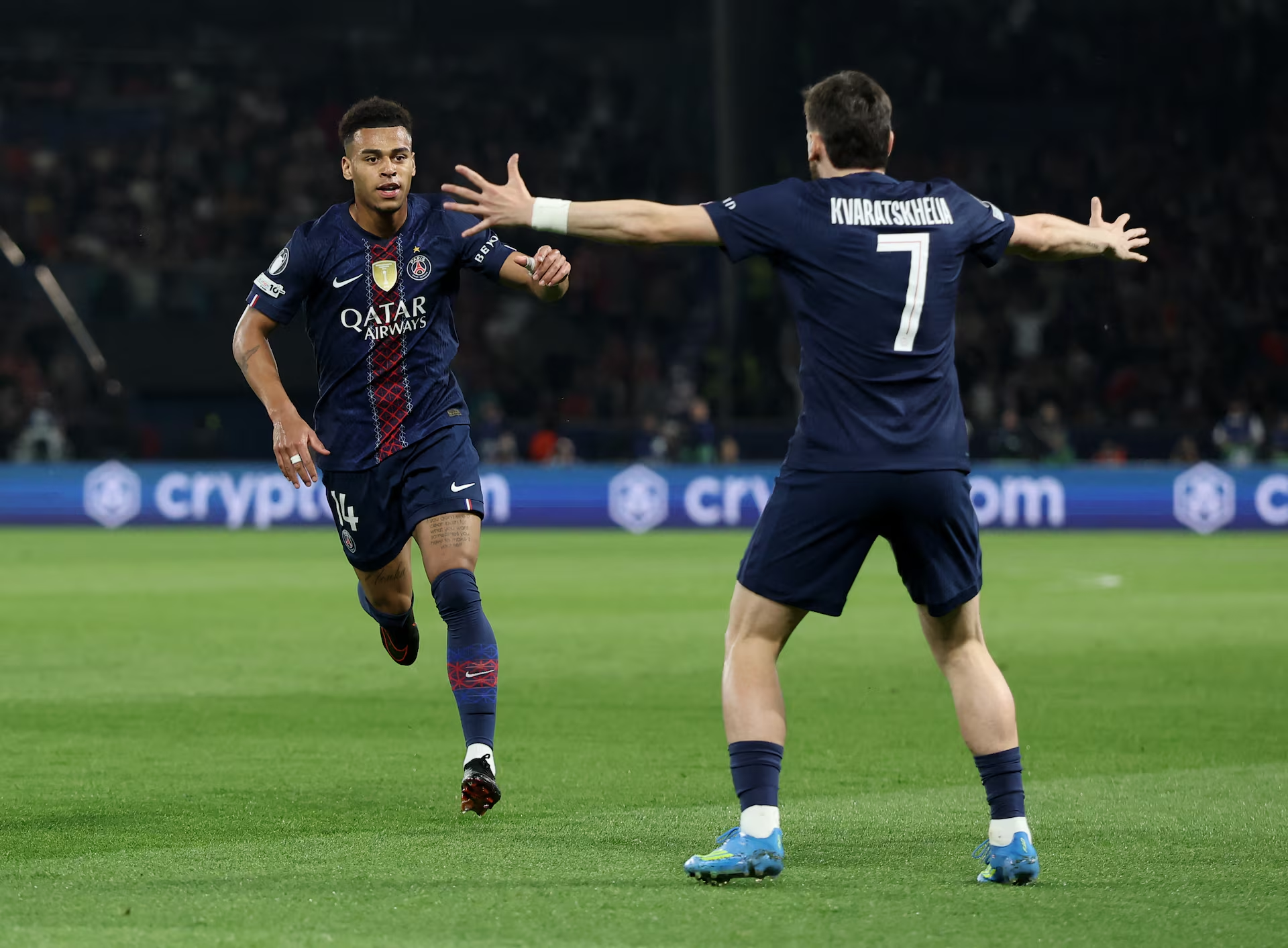
Wednesday’s Champions League quarter-finals produced two different refereeing nights. At Camp Nou, Atlético Madrid beat Barcelona 2-0 in a tense, emotionally charged first leg officiated by István Kovács. In Paris, PSG beat Liverpool 2-0 in a match handled by José María Sánchez, where the biggest talking point was a penalty that did not survive VAR review. UEFA had appointed Kovács to Barcelona-Atlético and Sánchez to PSG-Liverpool before kick-off.
Barcelona vs Atlético Madrid: uncertain control, but the red card was right
Kovács did not deliver a fully calm performance. The game often felt edgy, and at times the match management looked a little uncertain rather than fully authoritative. But the biggest call of the night was the one that mattered most: Pau Cubarsí’s red card. Barcelona went down to 10 men late in the first half after Cubarsí denied an obvious goalscoring opportunity, and that dismissal became the turning point before Julián Álvarez scored from the resulting free kick.
From a Laws of the Game perspective, that red stands up well. IFAB says DOGSO decisions must consider distance to goal, direction of play, likelihood of control, and the location/number of defenders. On the reported sequence, the foul denied a clear attacking chance and fits the DOGSO framework much better than a caution. This was not a red for style or emotion; it was a red because the attack had crossed into obvious-opportunity territory.
That is the key distinction for TVV. A referee can have an uneven night and still get the biggest disciplinary decision right. That is what happened here. Kovács did not look completely comfortable throughout, but on the major red-card call, the final decision was defensible and, in our view, correct.
The Musso-Le Normand moment: if Musso’s pass put the ball in play, the debate changes completely
This incident depends on one key factual point: did Musso actually take the goal kick with his foot? If he did, then the ball was already in play, and Le Normand’s later action cannot be defended as part of an incomplete restart. In that scenario, the phase has moved into normal open play, which means any hand use by the defender must be judged under the regular handball law.
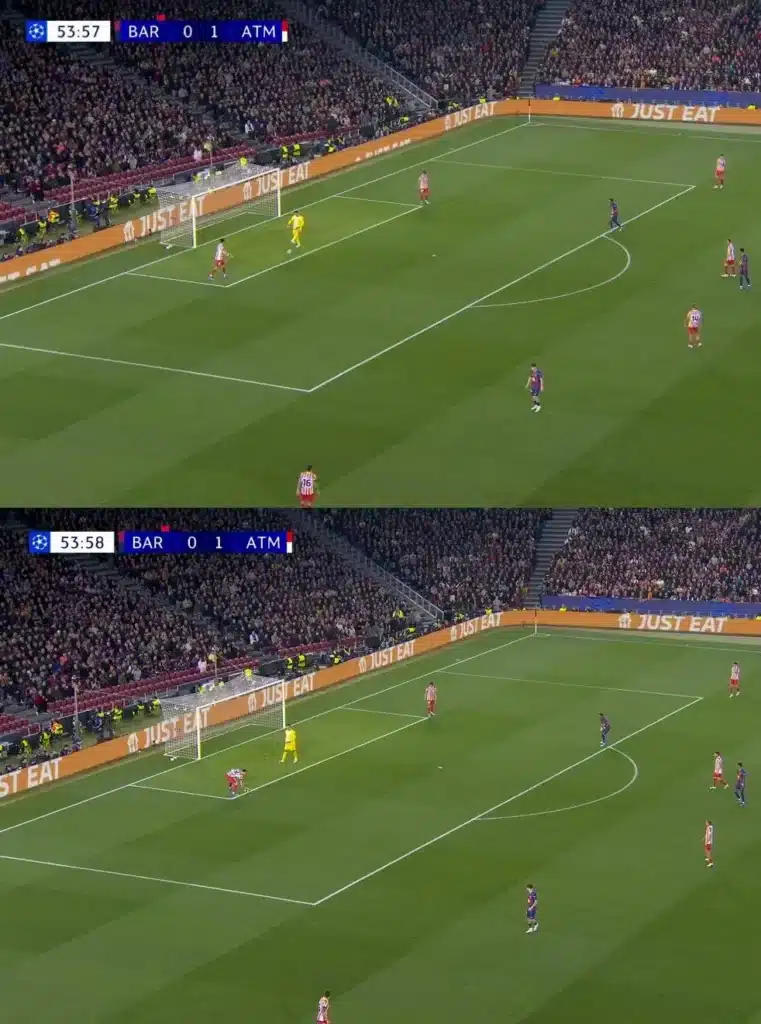
That is why this moment is more serious than a routine restart debate. If Musso’s short pass officially restarted play and Le Normand then used his hand to control the ball, the case for an offence becomes much stronger. The remaining question would no longer be about procedure, but about whether the hand contact was punishable.
Our view: if the video confirms Musso completed the short goal-kick pass and Le Normand then handled the live ball, Barcelona have a much stronger complaint than they would in a simple restart-confusion situation.
Our Barca-Atletico referee verdict
Kovács had a difficult game and did not always transmit complete calm. But he got the most important decision right, and that matters more than whether every minor moment felt smooth.
Referee rating: István Kovács — 6.5/10
Why not higher? Because the overall feel of the match was not one of complete control.
Why not lower? Because the decisive red-card moment was, in our view, correctly judged.
PSG vs Liverpool: the final big decision was right
The Paris match was a different kind of refereeing test. PSG dominated the game, beat Liverpool 2-0, had around 70% possession, and limited Liverpool to no shots on target. The official major controversy came in the second half when a penalty was awarded to PSG for a challenge involving Ibrahima Konaté on Warren Zaïre-Emery, only for the decision to be overturned after a VAR review.
This is where Sánchez’s night deserves a fair reading. The on-field penalty looked harsh, and the important thing is that the process reached the right endpoint. The review corrected the decision, and the match moved on without the referee doubling down on a soft call. In top-level European football, that is exactly what VAR is supposed to do: not protect the original decision at all costs, but correct it when the evidence points the other way.
That makes the final verdict on the Paris officiating much cleaner than the Barcelona one. There was a major penalty incident, it was reviewed, and the corrected outcome appears to have been the right one. Outside of that, PSG’s win was driven far more by football than by officiating noise.
Our PSG-Liverpool referee verdict
Sánchez’s game was not perfect, because the original penalty call looked too eager. But the important part is that the refereeing team ended up in the correct place, and there was no wider sense that the match result was distorted by officiating.
Final TVV verdict
If we strip the noise away, the two games gave us two simple conclusions.
In Barcelona vs Atlético, the referee looked a little uncertain, but the red card was right and should not be lost inside wider frustration. The Musso-Le Normand sequence is a debate, not a slam-dunk officiating failure.
In PSG vs Liverpool, the big refereeing moment was the overturned penalty, and the final outcome was right. That is how VAR should work.
Referee rating: José María Sánchez — 7.5/10
Why higher than Kovács? Because his match ended with fewer unresolved refereeing doubts, and the biggest controversy was corrected.

0 Comments
Join the conversation with respect. Comments are moderated and must follow our community rules.
Want to join the discussion?
Please log in or create an account to comment and reply. This keeps the conversation cleaner and safer.