
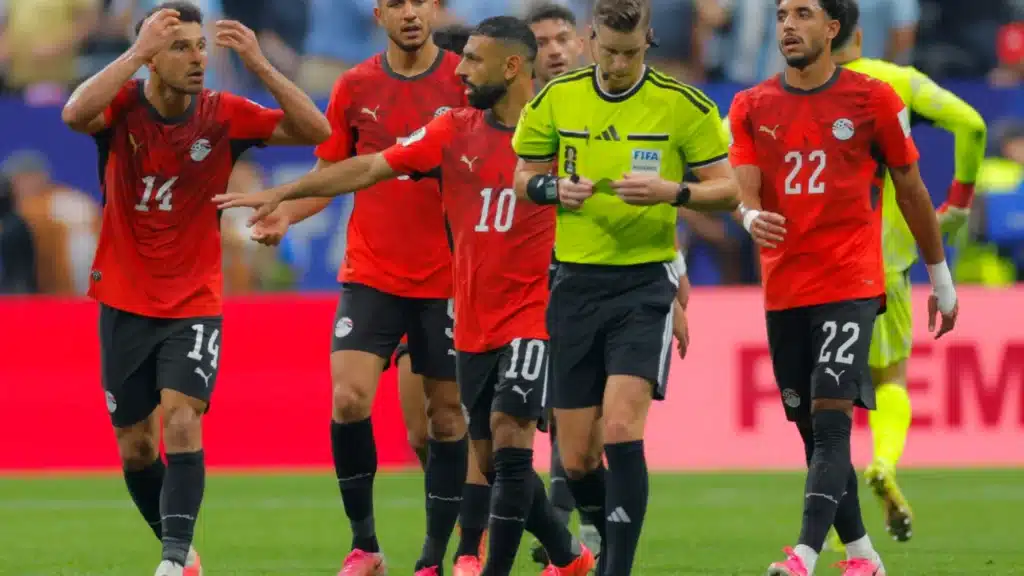
Argentina’s dramatic 3-2 comeback win over Egypt did not end at the final whistle. It continued in the press room, on social media and across football debate shows, where the biggest question quickly became about the referee rather than the result.
Egypt felt robbed. Their players felt the match had turned against them. Their coach, Hossam Hassan, openly criticised the officiating and suggested the World Cup was being pushed toward Argentina and Lionel Messi. Mostafa Zizo also strongly attacked the referee after the match, with reports quoting him as saying the game felt “rigged” and that Egypt’s work had been taken away by the decisions.
The emotions are understandable. Egypt led 2-0, had a goal disallowed after VAR intervention, wanted a penalty before Argentina’s winner and then lost the match in stoppage time. For a team that was minutes away from a historic World Cup quarterfinal, that is a brutal way to go out.
But emotional pain and corruption are not the same thing.
What Egypt complained about
There were three main complaints from the Egyptian side. First, Egypt believed one of their goals should not have been disallowed. The VAR review identified a foul in the attacking phase before the goal, and François Letexier cancelled the goal after checking the monitor. Egypt’s argument was that the foul was too far from the final shot and not serious enough to erase the goal.
Second, Egypt wanted a penalty late in the match, with reports saying Mohamed Salah was involved in an incident before Argentina’s winning goal. The Egyptian camp felt the referee and VAR ignored a key moment that could have changed the result.
Third, Egypt were furious with the overall direction of the match. Hassan said his team suffered an injustice and even said he would not watch the rest of the tournament. Reports also say he questioned whether FIFA wanted Messi and Argentina to stay alive in the competition for commercial reasons.
Was the disallowed goal correct?
This is the most important referee decision of the match. Under the VAR protocol, a goal can be reviewed for an attacking possession phase that directly leads to the goal. That means VAR is allowed to check whether a foul occurred before the final pass or shot if it was part of the same attacking move.
So the first question is not whether the foul happened close to goal. The real question is whether the foul was part of the same attacking phase and whether it was clear enough to recommend a review. If the foul clearly started the possession that led directly to the goal, VAR had the right to intervene. If the contact was soft or too disconnected from the goal, Egypt’s frustration becomes more understandable.
The VAR Verdict view: this was a supportable VAR intervention, but it was also the kind of decision that needed very clear communication. When a goal is removed for a foul earlier in the move, fans naturally feel the threshold must be very high.
The late penalty appeal
The late Egypt penalty appeal is more difficult without every available camera angle. From a referee analysis point of view, the question is simple: was there a careless trip, push, hold or charge that clearly prevented the attacker from continuing?
VAR cannot intervene just because there is contact. It must see a clear and obvious error.
That is why this incident is debatable. Egypt can feel they deserved a review, especially because of the timing and the match situation. But unless the contact clearly reached the penalty threshold, VAR would be expected to support the referee’s original decision.
The VAR Verdict view: this is a debatable non-intervention, but not enough on its own to prove bias or corruption.
Did Letexier favour Argentina?
This is where the conversation must be careful.
François Letexier is one of UEFA’s top referees and came into this match with a strong tournament reputation. That does not mean he cannot make mistakes. Every referee can. But accusing a referee of corruption requires evidence, not only anger after a painful defeat. Egypt had reasons to be frustrated. The disallowed goal was a huge moment. The late penalty appeal was a major talking point. The emotional finish, yellow cards and technical area dismissals made the match feel even more explosive.
But there is a big difference between saying:
“Egypt were unlucky and some decisions were debatable”
and saying:
“The match was bought”
At this stage, there is no public evidence that Argentina, FIFA or anyone else bought the match. No evidence has been presented showing that Letexier acted dishonestly. The available facts show controversial decisions, not proven corruption.
Who would benefit from corruption?
This is the uncomfortable question many fans avoid.
If someone says the match was fixed, they must explain the mechanism.
Who paid? Argentina? FIFA? A sponsor? Someone around Messi?
That is a very serious claim.
Argentina do not need to buy a match to have a chance against Egypt. FIFA may benefit commercially from Messi staying in the tournament, but commercial benefit is not proof of match manipulation. Football history is full of controversial decisions involving big teams, but controversy alone does not prove corruption.
The VAR Verdict view is clear: it is reasonable to criticise decisions. It is reasonable to say Egypt deserved more clarity. It is not responsible to claim corruption without evidence.
Egypt’s behaviour after the match
Egypt’s disappointment was real, but the reaction after the match crossed the line.
Players and staff have the right to disagree with decisions. They can ask questions. They can express frustration. But accusing officials of corruption publicly is dangerous for the game and for referee safety.
The Laws of the Game allow referees to caution or dismiss players and team officials for dissent, irresponsible behaviour and aggressive protests. If members of Egypt’s bench were dismissed after the final whistle, that fits the referee’s responsibility to protect the authority of the match officials and restore order.
The VAR Verdict
Argentina vs Egypt was one of the most emotional matches of the World Cup.
Egypt played bravely and had every right to feel devastated. Their anger over the disallowed goal and the late penalty appeal is understandable. These were major moments, and FIFA should want maximum transparency in decisions of this size.
But corruption is a different accusation.
Based on what is publicly available, this match should be described as controversial, not corrupt. Letexier’s decisions can be analysed and challenged, but there is no evidence that the match was bought or that Argentina were deliberately pushed through.
The better conclusion is this: Egypt were hurt by two huge subjective decisions, Argentina showed elite mentality in the final minutes, and the referee became the centre of a debate that will continue for days.
For The VAR Verdict, the key message is simple. Question the decisions. Analyse the VAR protocol. Demand consistency. But do not turn every painful defeat into a corruption claim without proof.

0 Comments
Join the conversation with respect. Comments are moderated and must follow our community rules.
Want to join the discussion?
Please log in or create an account to comment and reply. This keeps the conversation cleaner and safer.