
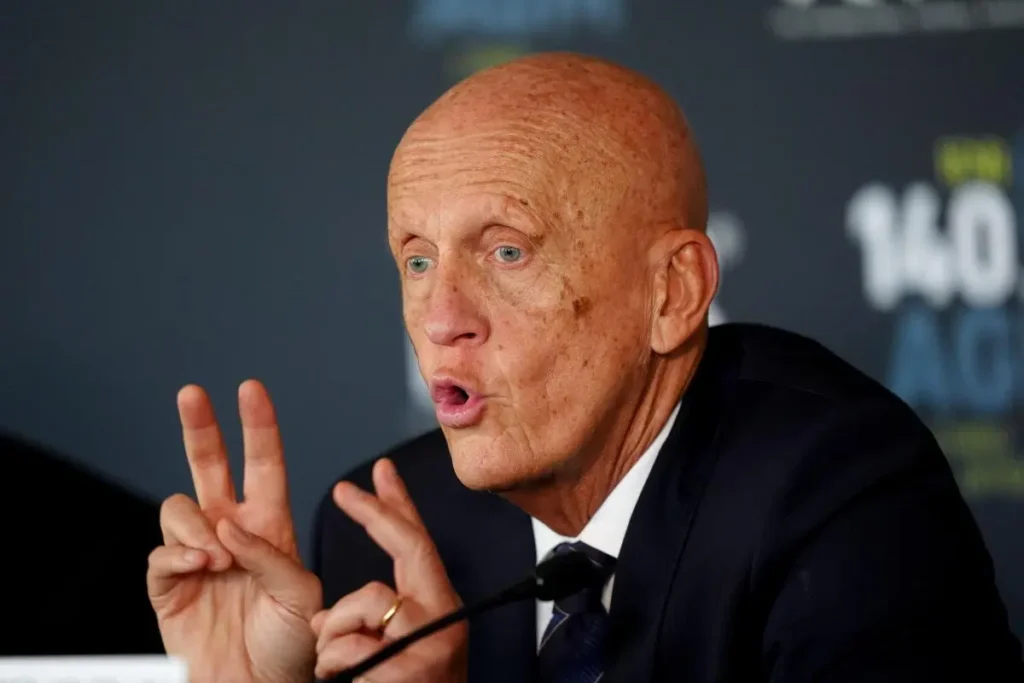
FIFA‘s Chief Refereeing Officer Pierluigi Collina has publicly responded to the growing controversy surrounding Argentina’s dramatic 3-2 victory over Egypt, firmly rejecting accusations that FIFA referees were influenced or favored the defending champions.
His comments come after the Egyptian Football Association filed an official complaint against French referee François Letexier, while Egypt coach Hossam Hassan, midfielder Mostafa Zizo and many supporters claimed that key refereeing decisions unfairly changed the outcome of the match.
“We are not influenced by anyone”
In an interview published by FIFA, Collina delivered a clear message.
“We are not influenced by anyone.”
The legendary Italian referee stressed that FIFA match officials make their decisions independently and are not affected by outside pressure, including criticism from coaches, players, supporters or even FIFA itself. He also warned that unfounded accusations can damage the credibility of referees and even lead to threats against officials and their families.
Why VAR disallowed Egypt’s goal
One of the biggest talking points from the match was Egypt’s disallowed third goal.
Many supporters argued that the foul occurred too far before the finish to justify VAR intervention.
Collina disagreed.
According to FIFA’s refereeing chief, there is no time or distance limit within the attacking possession phase when reviewing a goal. If a foul occurs during the same attacking sequence that directly leads to the goal, VAR is entitled to intervene.
Referring to the incident involving Marwan Attia and Lisandro Martínez, Collina was direct.
“A foul is a foul.”
He explained that stepping on an opponent’s foot is a punishable offence regardless of where it happens during the attacking move, provided it remains part of the same possession.
The late penalty appeal
Egypt also believed they should have received a penalty shortly before Argentina scored the winning goal.
Collina defended that decision as well.
He said the contact between Mohamed Salah and Julián Álvarez was considered normal football contact by both the referee and the VAR team, meaning there was no clear foul and therefore no reason for VAR to intervene.
A strong message from FIFA
Perhaps the most important part of Collina’s interview was not about one specific decision.
It was about protecting referees.
He acknowledged that debate is an essential part of football but insisted that criticism must remain based on evidence rather than accusations.
According to Collina, questioning the integrity of referees without proof can have serious consequences, particularly when officials become targets of abuse or threats after controversial matches.
What does this mean for François Letexier?
Collina’s public defence is also a significant signal regarding François Letexier’s future in the tournament.
Although Egypt has formally requested that FIFA remove the French referee and his entire officiating team from the World Cup, FIFA has given no indication that such action will be taken.
Instead, Collina’s comments suggest that FIFA remains confident both in Letexier’s decisions and in the way VAR was applied during the match.
The VAR Verdict
Pierluigi Collina rarely comments publicly on individual refereeing decisions during a major tournament.
That is why his response carries significant weight.
Rather than avoiding the controversy, FIFA’s refereeing chief directly addressed the two biggest incidents from Argentina vs Egypt and publicly defended both the referee and the VAR team.
Whether supporters agree with those decisions or not, FIFA has now made its position clear.
The governing body believes the disallowed goal was correctly overturned, the late penalty appeal did not meet the threshold for intervention, and its referees acted independently throughout one of the World Cup’s most controversial matches.
For The VAR Verdict, this response is likely to shape the debate going into the quarterfinals. While Egypt’s complaint remains under review, FIFA has already delivered the strongest possible message: its confidence in the officiating team has not changed.

0 Comments
Join the conversation with respect. Comments are moderated and must follow our community rules.
Want to join the discussion?
Please log in or create an account to comment and reply. This keeps the conversation cleaner and safer.