
Champions League Verdicts: Bayern Punish Real, Arsenal Escape Lisbon
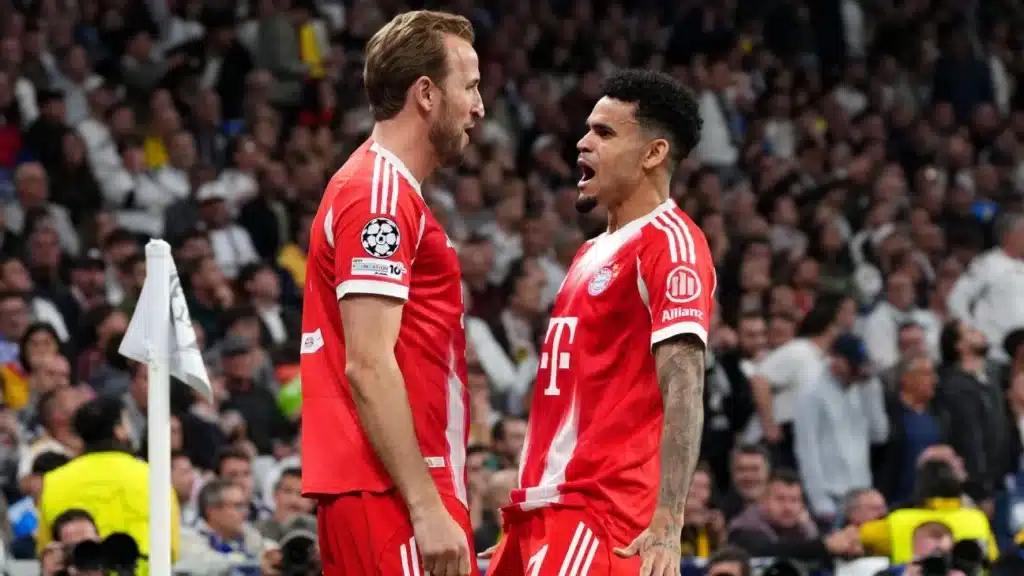
Tuesday night’s Champions League quarter-finals were shaped more by football than refereeing drama, and that is often a sign of a healthy officiating night. Bayern left Madrid with a 2-1 win through goals from Luis Díaz and Harry Kane before Kylian Mbappé pulled one back, while Arsenal took a 1-0 victory in Lisbon with a late Havertz finish.
There is one important caution before judging the officials too aggressively: as of now, UEFA’s published VAR technical explanations page still does not include any April 7 quarter-final incidents. The latest official entries on that page stop at earlier March knockout matches, so for these two games we are relying on the available match reports and live summaries rather than a fresh UEFA technical breakdown.
Real Madrid 1-2 Bayern Munich: the referee did not decide the match
This was the bigger fixture, the louder stadium, and the heavier pressure. But from an officiating perspective, the most striking thing about Michael Oliver’s night is that there is no strong evidence that he became the story. The public reporting after the game focused on Bayern’s quality, Real Madrid’s defensive vulnerability, and Manuel Neuer’s saves, not on a major penalty, a missed red, or a clear VAR failure.
That matters. In a match of this size, silence around the referee is usually a compliment. Oliver appeared to let the game breathe without losing control, which is generally the right approach in a high-level European tie unless the threshold starts drifting. From the reports available, that drift never became the dominant issue. Bayern were the better side for long stretches, and their lead looked built on football decisions rather than refereeing advantage.
Our verdict on the key calls in Madrid is therefore a cautious one: most of the important decisions appear to have been right, or at minimum not obviously wrong from the evidence now in the public domain. That is not flashy analysis, but it is honest analysis. A lot of referee content online is built on forcing outrage into matches that do not really contain it. This was not one of those nights.
Our referee rating: Michael Oliver — 7.5/10
That rating is not spectacular, because this was not a night of difficult, high-profile correction calls that demanded genius. It is solid because the game stayed about Bayern’s attacking sharpness and Real’s response, not about the whistle. For a Bernabéu quarter-final, that is a good evening.
Sporting CP 0-1 Arsenal: low noise, disciplined control
The Lisbon tie was tighter, lower-event, and more likely to hinge on small decisions than on one explosive incident. Arsenal won it late through Havertz, but the refereeing theme was not scandal. It was control. Daniel Siebert had a match that needed calm handling more than theatrical intervention.
The available live reports point to offside as the main review area rather than penalty-box controversy. Live coverage described Sporting having a goal ruled out for offside in the build-up, and there were also reports of an Arsenal goal being scrubbed earlier in the match before Havertz eventually found the winner. In other words, the notable moments were mostly technical ones, not explosive disciplinary ones.
That usually changes how a referee should be judged. In a tense first leg, especially one where both teams still believe the tie is alive, the official’s job is to keep irritation from becoming chaos. On the evidence available, Siebert did that. He did not appear to over-officiate. He did not dominate the spectacle. And there is no strong post-match reporting wave claiming that a missed major call distorted the result.
One small side note: there was outside confusion during the match over a yellow-card graphic involving Sporting forward Luis Suárez, but that was reported as a broadcast/feed error, not a refereeing mistake. So it should not be held against the officiating team.
Our referee rating: Daniel Siebert — 8/10
Why slightly higher than Oliver? Because this was the kind of match that can easily become choppy, nervous, and over-managed. If the referee keeps that sort of first leg under control without creating a fresh debate, he has usually done his job well.
Wrong decisions? Not many — and that is the real takeaway
For The VAR Verdict, the honest headline from these two games is not “refereeing disaster.” It is almost the opposite.
In Madrid, the result seems to have been earned by Bayern’s performance level more than shaped by officiating. In Lisbon, the officials appear to have handled a cagey first leg without gifting the game a false controversy. And because UEFA has not yet posted fresh technical explanations for these quarter-finals, there is no official sign at this stage that either match contained one of the kind of major VAR incidents UEFA usually chooses to highlight publicly.
That does not mean every small call was perfect. No high-level match is refereed perfectly. But based on what is available now, the stronger reading is this: Tuesday’s Champions League ties were defined more by execution than by officiating error.