
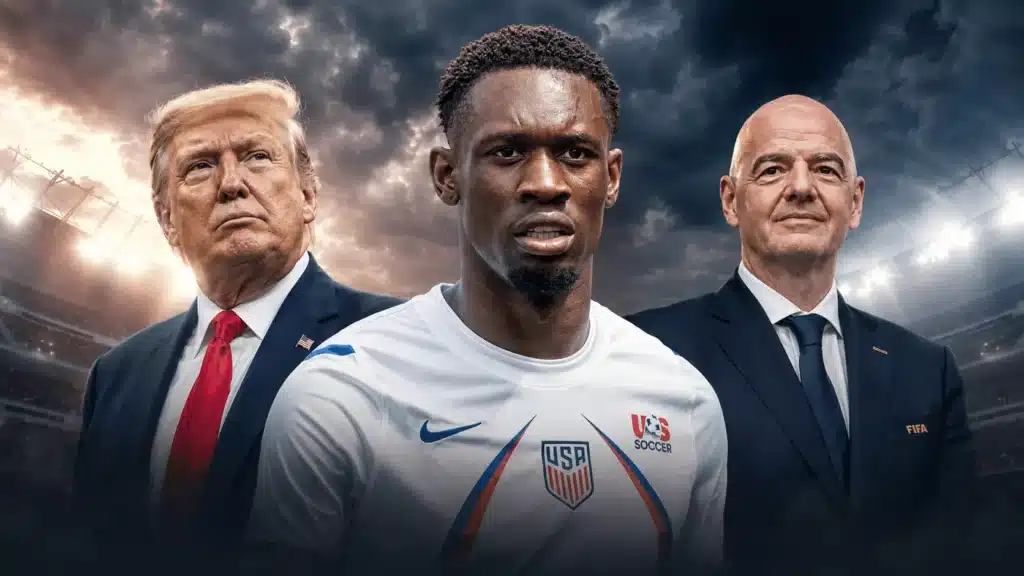
FIFA has made one of the most controversial disciplinary decisions of the World Cup by allowing Folarin Balogun to play for the United States against Belgium, despite his red card in the Round of 32 win over Bosnia and Herzegovina.
Balogun was sent off after a VAR review for stepping on the ankle of Bosnia defender Tarik Muharemovic. The referee upgraded the incident to a straight red card for serious foul play, which normally brings an automatic one match suspension.
But before the USA’s Round of 16 match against Belgium, FIFA’s disciplinary committee suspended the implementation of the ban, placing Balogun on a probationary period instead. That means he is available to play, but if he commits a similar offence during the probation period, the suspension can return with any new punishment added.
Why was Balogun sent off?
The incident itself was not a classic violent red card. Balogun challenged for the ball and caught Muharemovic on the ankle. The key question was whether the action endangered the safety of the opponent.
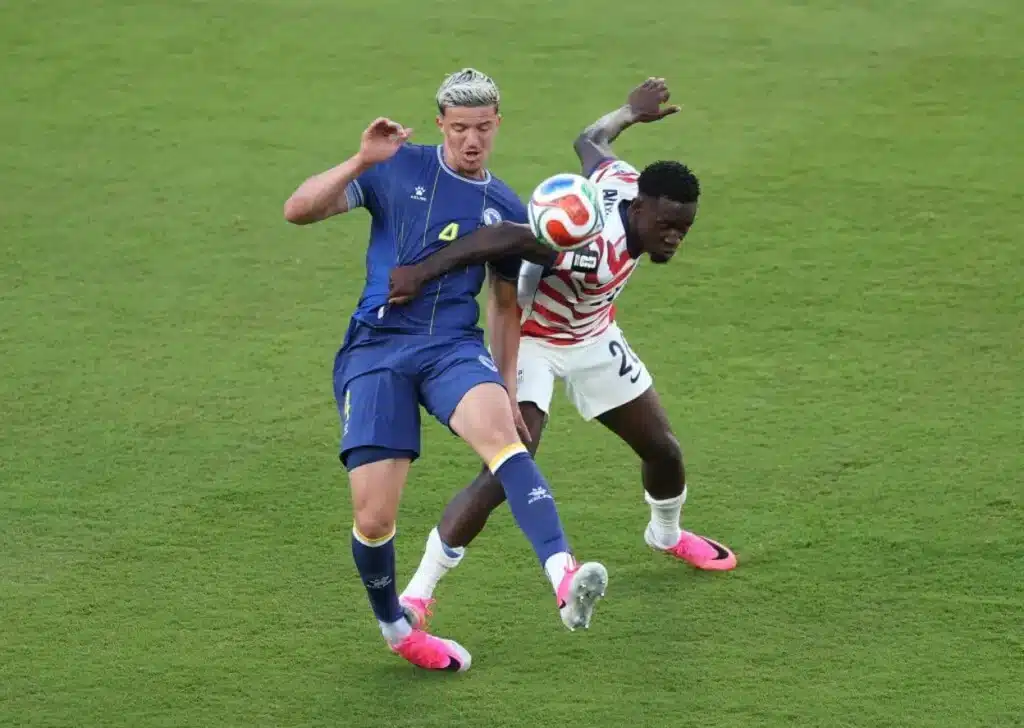
Under Law 12, serious foul play does not require intent. If a player challenges in a way that uses excessive force or endangers an opponent, a red card can be correct even if the player did not mean to hurt anyone. That is why VAR became involved. Once the referee saw the replay, he decided the contact met the red card threshold. From a pure Laws of the Game perspective, the red card was defensible. The more difficult question is whether the punishment should then be suspended.
Why Belgium are angry
Belgium’s frustration is easy to understand. They prepared for a knockout match believing the USA would be without one of their most dangerous attackers. Balogun has been one of the standout American players in the tournament, and his availability changes the tactical picture. Belgium’s camp was described as astonished by the decision. From Belgium’s point of view, the problem is not only Balogun playing. The problem is the timing and the precedent. If automatic red card bans can be suspended before a knockout match, every team will now ask the same question: when is a red card suspension really automatic?
The Trump and Infantino factor
The controversy became even bigger because multiple reports say U.S. President Donald Trump contacted FIFA president Gianni Infantino about the case. Reuters reported that the decision followed a personal appeal from Trump to Infantino, while the Guardian reported that Trump made several calls. This is where the story moves beyond football. Even if FIFA’s disciplinary committee had the legal power to suspend the ban, the appearance of political influence is damaging. Football discipline must look independent. When a decision benefits a host nation after reported political pressure, trust becomes harder to maintain.
Was FIFA right?
There are two ways to look at it. From the USA’s perspective, Balogun’s red card was harsh. The incident looked accidental rather than malicious, and the team already played the rest of the Bosnia match with 10 men. Mauricio Pochettino supported the reversal and argued that the USA had already been punished enough. From a referee and disciplinary perspective, however, this is dangerous territory. A red card for serious foul play is not only about intent. It is about player safety. If FIFA accepts the red card but removes the immediate suspension, it creates confusion about how serious foul play is being treated.
The VAR Verdict
This is not simply a question of whether Balogun deserved sympathy. The bigger issue is consistency. If Article 27 can be used in this case, FIFA must be ready to explain clearly why this red card was different from other serious foul play cases. Without that transparency, the decision will look political, selective and unfair to Belgium. Balogun may now play against Belgium, but FIFA has created a much larger debate.
For The VAR Verdict, the key conclusion is clear: the red card itself was understandable under Law 12, but suspending the automatic ban in the middle of a World Cup knockout stage is a major decision that FIFA needed to explain with far more clarity.

[…] Folarin Balogun red card controversy […]