
The World Cup 2026 European play-off referee decisions from March 26 mattered because these were knockout semi-finals, and every major call carried real weight. Across the eight ties, the clearest officiating flashpoints came in Czechia vs Republic of Ireland and Ukraine vs Sweden, while several other matches were decided more by football than by refereeing controversy. The fixture list included Italy vs Northern Ireland, Wales vs Bosnia and Herzegovina, Ukraine vs Sweden, Poland vs Albania, Türkiye vs Romania, Slovakia vs Kosovo, Denmark vs North Macedonia and Czechia vs Republic of Ireland.
Quick Verdict
The biggest calls on the night were mostly right. Glenn Nyberg’s team handled two major penalty decisions correctly in Czechia vs Republic of Ireland, and João Pinheiro was right to award Sweden a second-half penalty against Ukraine. On the evidence available from match reports and live coverage, there is not a strong case that March 26 was a night of clear, competition-shaping VAR failure.
World Cup 2026 European play-off referee decisions: the key flashpoints
Czechia vs Republic of Ireland: the busiest officiating game of the night
This was the most review-heavy semi-final. Czechia and the Republic of Ireland drew 2-2 after extra time, with Czechia advancing 4-3 on penalties, and both teams had major penalty moments in normal time. Glenn Nyberg refereed the game, with Bram van Driessche on VAR.
Ireland’s opener came from the spot after a VAR review. NBC’s live report said Nathan Collins went down under a challenge following a long throw, the incident was checked, and a penalty was awarded; Troy Parrott converted. On the available description, that is a correct penalty and a correct VAR intervention: it was a penalty/no-penalty situation, which sits squarely inside protocol, and the review supported the on-field outcome rather than manufacturing one.
Czechia then got a penalty of their own when Ryan Manning hauled back Ladislav Krejci after a corner was flicked on. Patrik Schick scored to make it 1-1. Again, this looks like the right call. Pulling or holding an opponent in the box is still a direct-free-kick offence, even in the chaos of a set-piece. Too often these incidents are waved away as “normal contact”; this one, from the public descriptions, crossed the line into a punishable hold.
The most instructive non-call came later. In extra time, Czechia wanted another penalty for handball, but the live review concluded the contact looked to be outside the area, so no penalty was given. That is the right outcome in protocol terms. VAR can review penalty incidents, but it cannot turn an offence outside the box into a penalty. That distinction matters, and it appears the officiating team got it right under pressure.
Ukraine vs Sweden: penalty correct, no obvious case for more
Sweden beat Ukraine 3-1, with Viktor Gyökeres scoring a hat-trick. The key refereeing moment arrived in the 71st minute, when Anatoliy Trubin fouled Gyökeres in the penalty area, was booked, and Gyökeres converted from the spot. Reuters and Sky’s live coverage are aligned on the core facts: there was a foul by the goalkeeper in the box, the penalty was awarded, and Trubin received a yellow card. João Pinheiro was the referee, with Tiago Martins on VAR.
On the available evidence, the penalty itself is the easy part of the verdict: correct call. The caution is also hard to attack from the public reporting because nothing in the accessible accounts points to a clear missed direct-red situation. Without stronger visual evidence showing a fundamentally different offence, this is not a convincing example of referee error; it is a straightforward box foul correctly punished.
Wales vs Bosnia and Herzegovina: high drama, but not a clear officiating scandal
Wales drew 1-1 with Bosnia and Herzegovina before losing 4-2 on penalties. Dan James gave Wales the lead, Edin Džeko equalised late, and Bosnia advanced. István Kovács handled the match, with Dennis Higler on VAR.
This was tense, emotional and difficult, but the public match reports do not show a strong, well-documented case for a decisive referee or VAR mistake. Džeko’s equaliser came from a corner, and the post-match focus was more on the late concession and the shootout than on a clear foul, offside or handball controversy that should have changed the result. In a roundup like this, that matters: not every painful elimination is proof of bad officiating.
The quieter nights
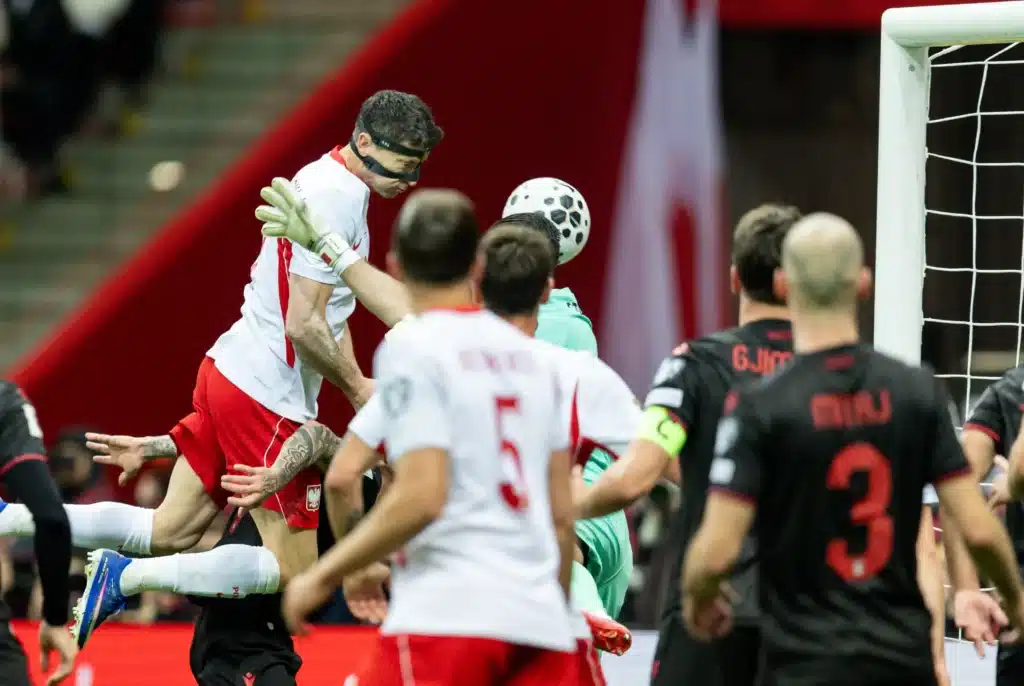
Several other semi-finals passed without a similarly strong public case for a major refereeing error. Italy beat Northern Ireland 2-0 under Danny Makkelie with Pol van Boekel on VAR. Poland beat Albania 2-1 with Anthony Taylor refereeing and Jarred Gillett on VAR. Türkiye beat Romania 1-0 under François Letexier with Willy Delajod on VAR. Denmark beat North Macedonia 4-0 with Felix Zwayer and Bastian Dankert, while Kosovo beat Slovakia 4-3 in the night’s wildest scoreline. In the major live trackers and match reports reviewed, none of those ties produced an obvious, match-defining officiating blunder on the same level as the big talking points in Prague or Ukraine-Sweden.
Why VAR could intervene — and why sometimes it could not
VAR exists for clear and obvious errors or serious missed incidents in four areas: goal/no goal, penalty/no penalty, direct red card, and mistaken identity. That is why the review in Czechia vs Republic of Ireland made sense when Collins’ challenge was checked for a penalty, and why the late Czech appeal could still end with no penalty if the offence was outside the box. It is also why Sweden’s penalty against Ukraine falls naturally within protocol.
What VAR is not there to do is re-referee every physical duel just because a knockout match feels huge. If the contact is supportable, if the offence is outside the penalty area, or if the available evidence does not show a clear mistake, the original decision should stand. That restraint is part of good VAR, not a failure of it.
Law context
Under IFAB Law 12, a direct-free-kick offence by a defender inside their own penalty area results in a penalty kick. IFAB is also explicit that if a defender starts holding outside the box and continues holding inside it, the correct restart is still a penalty. That is the law logic behind why the Czech set-piece incident is supportable as a penalty if the hold materially affects the attacker inside the area.
The other key legal point is territorial: if the foul or handball is outside the penalty area, it cannot become a penalty just because the moment is dramatic. In those cases, the law and the VAR protocol draw a hard line, and the officiating team must respect it.
Final verdict
The cleanest reading of March 26 is this: there was pressure, emotion and knockout chaos, but not a continent-wide refereeing meltdown. The strongest complaints of the night do not survive close scrutiny particularly well. The major penalty decisions in Czechia vs Republic of Ireland and Ukraine vs Sweden look supportable in law, VAR appears to have been used properly where it mattered, and several other semi-finals simply did not produce the kind of clearly wrong, high-impact decision that justifies outrage. That is not as dramatic as a scandal headline, but it is the more honest verdict.
FAQ
Which March 26 World Cup play-off semi-final had the biggest VAR talking point?
Czechia vs Republic of Ireland had the biggest VAR storyline, because Ireland’s penalty followed a review and Czechia later had a strong appeal checked but not upgraded to a penalty.
Was Sweden’s penalty against Ukraine the correct decision?
Based on the available Reuters and Sky reporting, yes. Trubin fouled Gyökeres in the box, a penalty was awarded, and the description of the incident supports that outcome.
Did Wales go out because of a refereeing mistake against Bosnia and Herzegovina?
There is no strong public evidence from the match reports reviewed that Wales were eliminated by a clear referee or VAR error. Bosnia equalised late and then won 4-2 on penalties.
Can VAR award a penalty if the foul starts outside the box?
A penalty requires a relevant offence inside the area, though IFAB says holding that starts outside and continues inside can still be punished with a penalty. VAR can review penalty incidents, but it cannot invent a penalty where the offence is outside the box.

0 Comments
Join the conversation with respect. Comments are moderated and must follow our community rules.
Want to join the discussion?
Please log in or create an account to comment and reply. This keeps the conversation cleaner and safer.