
UEFA Champions League VAR Transparency Page: A Long-Overdue Step Toward Clearer Decisions
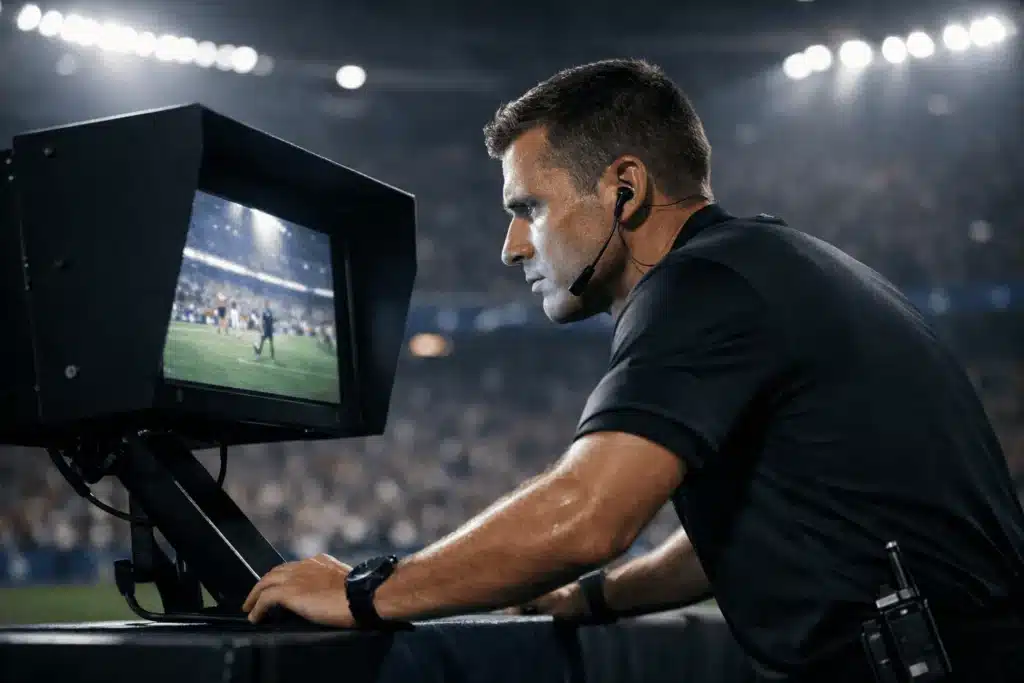
UEFA Champions League VAR Transparency Page Explained: A Good Step, But Not Full Transparency
VAR has never really had a camera problem. It has had an explanation problem. That is why the UEFA Champions League VAR transparency page matters: after years of major European nights ending with arguments, clips and guesswork, UEFA has started publishing official technical explanations for selected incidents from the 2025/26 competition, sometimes with images or video. UEFA launched the page on March 19, 2026 and said the explanations would be prepared by refereeing experts on duty.
That does not mean football has suddenly become fully open. It means UEFA has finally accepted something supporters, coaches and media have been saying for years: when a huge VAR decision shapes a Champions League tie, silence usually makes the fallout worse. UEFA itself has already acknowledged that, despite improving accuracy, VAR remains one of the game’s biggest talking points.
Quick Verdict
UEFA’s move is correct and overdue. It is a meaningful step toward clearer public understanding of major decisions. But it is still partial transparency, not full transparency. UEFA is promising selected technical explanations after key incidents, not live access to every conversation and not publication of every review.
What UEFA has actually launched
The page is not a vague PR gesture. UEFA has already used it to explain specific incidents from the 2025/26 knockout rounds. Among the early examples are a goal disallowed in Liverpool vs Galatasaray for offside in the build-up, a penalty awarded in Bayern vs Atalanta for an arm in an unnatural position, a penalty retake in the same match for goalkeeper encroachment, a penalty awarded in Barcelona vs Newcastle for holding from behind, a penalty awarded in Man City vs Real Madrid for deliberate handball denying a goal, another goal disallowed in that tie for offside, and a red card in Juventus vs Galatasaray for a studs-first challenge that clearly endangered an opponent’s safety.
That matters because UEFA is not speaking in generalities. It is attaching the explanations to real incidents that affected real knockout matches. It also means the refereeing body is, at least in selected cases, willing to stand behind the logic publicly rather than leaving supporters to rely on television punditry or social clips stripped of context. That is a better editorial environment for everyone covering the game.
Were those decisions right, wrong, harsh or unclear?
Based on UEFA’s own descriptions, most of the incidents published so far look either correct or at least supportable in law. Offside in the build-up to a goal is a standard reviewable goal/no-goal matter. A handball with the arm away from the body in an unnatural position can support a penalty decision. Goalkeeper encroachment on a saved penalty can lead to a retake. A studs-first challenge that endangers an opponent’s safety fits the serious foul play logic behind a direct red card.
But there is an important limit here. Without every broadcast angle and without the full match context, it would be careless to pretend each incident can be graded perfectly from the written explanation alone. The safer and more honest verdict is this: the legal reasoning UEFA has published appears coherent and consistent with VAR protocol, even if some incidents may still feel harsh in the optics of the moment. That distinction matters. A decision can look severe and still be supportable under the Laws.
Why the UEFA Champions League VAR transparency page matters
The real value of this page is not that it will end arguments. It will not. Football is too emotional, and many incidents will always live in the grey area between “supportable” and “universally accepted.” What this page can do is reduce the sense that major decisions disappear into a black box. And that is important in a competition where one penalty, one red card or one offside touch can decide a quarter-final place or tilt the story of a whole season. UEFA’s own wider discussion around VAR has recognized both the accuracy gains and the communication problem.
There is also a credibility benefit. When governing bodies explain only in vague post-match soundbites, distrust grows. When they publish a technical rationale tied to the actual incident, the debate becomes narrower and more informed. Supporters may still disagree, but they are disagreeing with a defined explanation rather than a vacuum. That is progress, even if it is not the final answer. This is an inference from UEFA’s new approach and from IFAB’s own emphasis on visible, communicated reviews.
Why VAR could intervene — and why this page changes nothing about the protocol
This is the key point many readers will miss: the new page does not expand VAR’s power in the current Champions League by itself. Under the current IFAB VAR protocol, the VAR may assist only where there is a clear and obvious error or serious missed incident in four broad categories: goal/no goal, penalty/no penalty, direct red card, and mistaken identity. The referee must make the original decision, only the referee can initiate the review, and the final decision always remains with the referee.
So when UEFA explains an offside in the build-up to a goal, a penalty call for handball, or a direct red for serious foul play, it is operating inside the standard protocol, not outside it. Just as importantly, plenty of things still sit outside normal VAR review once play has restarted, including many restart decisions. In other words, the transparency page can explain big calls more clearly, but it cannot turn non-reviewable incidents into reviewable ones.
Law context
The law background actually supports this move. IFAB’s protocol says the referee must remain visible during the review process “to ensure transparency,” and it also says competitions may implement systems in which the referee publicly explains and announces decisions following a VAR review or a lengthy check. UEFA’s new page sits naturally inside that logic: it is not a rewrite of the Laws, but an organized competition-level method of communicating decisions after the fact.
There is also a useful wider context from IFAB’s meeting on February 28, 2026. IFAB approved broader protocol adjustments for the 2026/27 Laws, including VAR help for clearly incorrect second-yellow red cards and, as a competition option, clearly incorrectly awarded corner kicks where the review can be completed immediately. Those changes are separate from UEFA’s transparency page, but they show that football’s lawmakers are moving on two tracks at once: what VAR may review, and how VAR decisions are communicated.
Final verdict
The UEFA Champions League VAR transparency page is a smart reform because it addresses the part of VAR that has often damaged trust most: not always the decision itself, but the lack of a clear public explanation afterward. On that level, UEFA’s decision is right. It is not cosmetic, because it is already being applied to real incidents. It is not revolutionary either, because it remains selective and does not open every layer of the process.
So the balanced verdict is simple. This is real progress, and probably the most practical transparency improvement UEFA could introduce quickly. But it is not the end of the argument. Until more decisions are explained, more consistently, and perhaps more immediately, the page should be seen as a better standard of accountability — not as proof that the VAR debate is settled. That would be too generous. What UEFA has done is useful. What it has not done is make controversy disappear.
FAQ
What is the UEFA Champions League VAR transparency page?
It is a UEFA page launched on March 19, 2026 to publish selected technical explanations of VAR decisions from the 2025/26 Champions League, with some major incidents also supported by images or video.
Will UEFA publish every VAR decision?
No. UEFA says selected technical explanations will be published. The announcement does not say that every VAR review or every controversial call will appear on the page.
Does the page change what VAR can review?
No. The page improves communication, not the review categories. Under the current IFAB protocol, VAR reviews are still limited to goal/no goal, penalty/no penalty, direct red cards and mistaken identity, subject to the clear-and-obvious-error or serious-missed-incident standard.
Can VAR review second yellow cards in the Champions League now?
The current IFAB protocol page still lists direct red cards, not second yellow cards, as a standard review category. IFAB approved changes on February 28, 2026 for the 2026/27 Laws that would allow VAR help for clearly incorrect second-yellow red cards, but that is a separate development from UEFA’s transparency announcement.
Why does this matter for fans?
Because even when supporters disagree with a decision, an official technical explanation narrows the debate. It gives fans, clubs and media a defined rationale to assess instead of leaving a major European incident to rumor and frustration. This is the practical value of UEFA’s new approach.