
UEFA Explains the Biggest VAR Calls from March 18 as the Champions League Quarter-Final Picture Becomes Clear
The noise after a major Champions League night is usually predictable: arguments over penalties, frustration over offside reviews, and endless debate about whether VAR helped or harmed the game. But this time, UEFA has given everyone something more useful than reaction clips or social media outrage. It has published official technical explanations for several of the key review moments from the March 18 round-of-16 second legs, turning a chaotic night into a much clearer case study in modern officiating.
For a refereeing-focused platform like The Var Verdict, that matters. These are not anonymous leaks or post-match opinions. UEFA’s explanations are presented as official descriptions prepared by refereeing experts on duty, and the March 19 update specifically addressed the most discussed incidents from Liverpool vs Galatasaray, Bayern vs Atalanta, Barcelona vs Newcastle, and the previous night’s Manchester City vs Real Madrid.
The most important takeaway is that UEFA’s language was firm and direct. In Barcelona vs Newcastle, the review at 45+1’ ended with a penalty because, according to UEFA’s explanation, Newcastle player No. 2 held an opponent from the back. That matters because it confirms the key point behind the intervention: this was not sold as a soft coming-together or a marginal contact decision, but as a holding offence serious enough to overturn the on-field call. Reuters’ match report adds the wider context: the review punished Kieran Trippier’s foul on Raphinha, Lamine Yamal converted the penalty, and the goal shifted the match at exactly the moment Barcelona needed control.
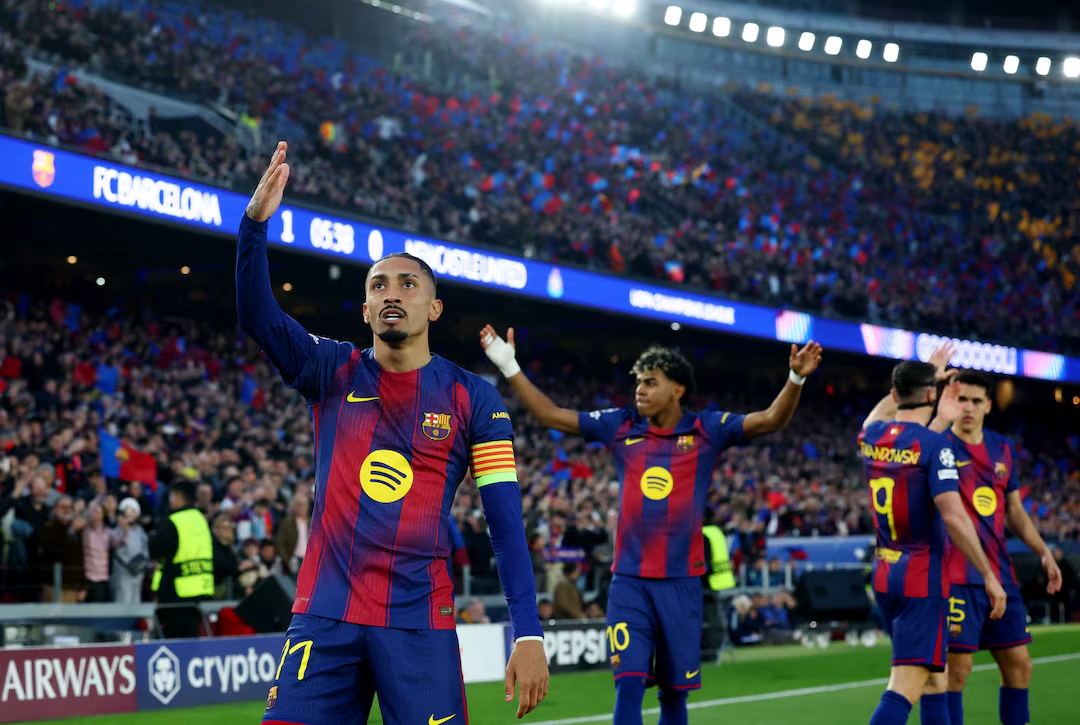
That sequence is a good reminder of what VAR is supposed to do at its best. It is not there to re-referee every shoulder brush in the box. It is there to correct decisive missed offences. UEFA’s wording suggests the officials judged the holding as clear enough to cross that threshold. In practical terms, it was a high-impact intervention because it changed a wild first half into a Barcelona advantage before the break, and the match then ran away from Newcastle in the second half.
In Bayern vs Atalanta, UEFA highlighted two separate VAR outcomes that are just as important for referee education. First, the penalty at 24’ was awarded because Atalanta player No. 42 touched the ball with his left arm, which was in an unnatural position and away from the body. Then, at 26’, the penalty had to be retaken because of encroachment by the goalkeeper, who saved the kick. This is exactly the kind of double-decision sequence that often frustrates fans but is entirely consistent with the way modern elite officiating handles handball and goalkeeper movement. Reuters’ report confirms Bayern went on to win 4-1 on the night and 10-2 on aggregate.
The Bayern examples show why post-match explanation pages are so valuable. One incident dealt with arm position and body shape. The other dealt with procedure after the kick. These are different laws, different review questions, and different forms of intervention, yet both became decisive. For analysts, that is the real value of March 18: it was not just dramatic, it was instructive.
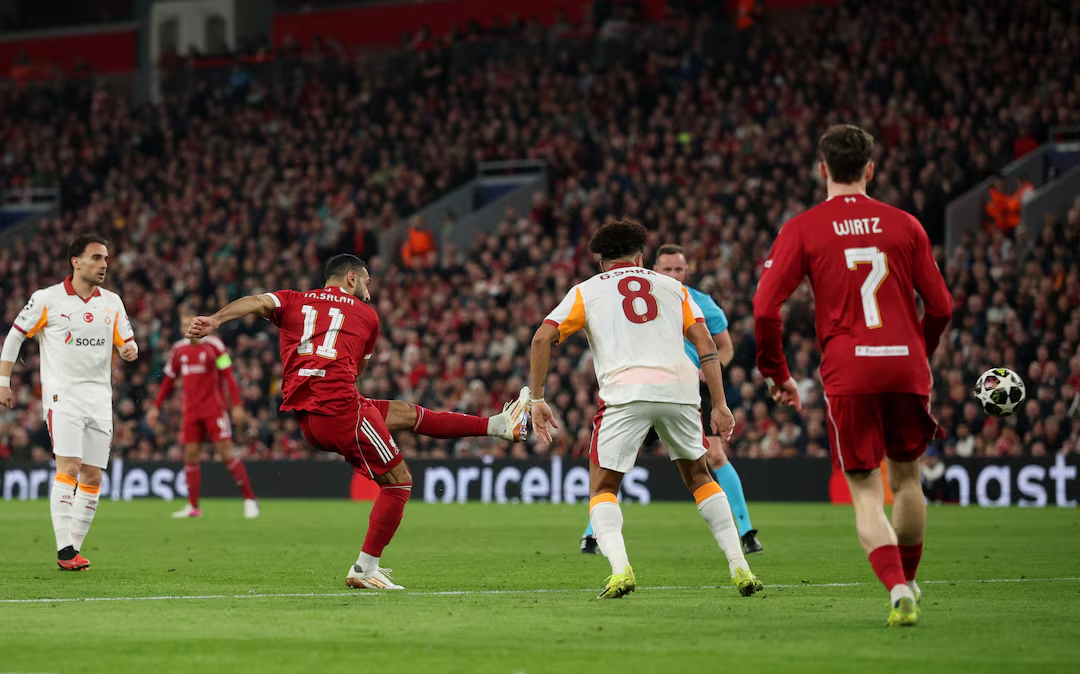
In Liverpool vs Galatasaray, UEFA’s note was shorter but still important. The governing body said the goal at 58’ was disallowed because Liverpool player No. 30 was in an offside position and played the ball in the build-up to the goal. That wording is useful because it emphasizes involvement in the attacking phase, not simply standing beyond the line. Reuters’ match coverage confirms Liverpool still advanced comfortably with a 4-0 win on the night and 4-1 on aggregate, but the disallowed goal is exactly the kind of decision that keeps offside interpretation under constant scrutiny.
The Manchester City vs Real Madrid explanation may be the one that carries the strongest officiating message. UEFA described the 21’ intervention as a penalty because Man City player No. 20 committed a deliberate handball offence denying the opposing team a goal. Later, at 90+1’, it confirmed that a Real Madrid goal was disallowed because Real Madrid player No. 7 was in an offside position and scored the goal. That combination — one review for a decisive handball inside the area and another for a late offside goal — captures the full modern VAR picture: game-changing incidents at both ends of the rulebook, one tied to punishment and the other to attacking legality. Reuters’ match report confirms Real Madrid won 2-1 at the Etihad and advanced 5-1 on aggregate.
There is also a broader tournament angle here. UEFA has now confirmed the quarter-final bracket and dates following the completion of the round of 16. The first legs are Sporting CP vs Arsenal and Real Madrid vs Bayern München on 7 April, followed by Barcelona vs Atlético de Madrid and Paris vs Liverpool on 8 April. The second legs are set for 14 and 15 April, with all matches kicking off at 21:00 CET.
That means the officiating conversation is already moving from explanation to anticipation. Barcelona now head into a quarter-final against Atlético in a tie that promises pressure, contact, and tactical fouling. Real Madrid vs Bayern is the type of heavyweight match where every penalty-area decision becomes global debate in seconds. Paris vs Liverpool brings two fast, transition-heavy teams that can create chaotic review situations. And Sporting vs Arsenal could easily become one of those finely balanced ties where one offside frame or one handball interpretation decides the story.
So the real story today is not simply that March 18 produced controversy. Big Champions League nights always do. The real story is that UEFA responded with unusual clarity. Its official explanations did not erase every debate, but they did give the football world a firmer base for analysis. For referee watchers, that is progress. For clubs, it is a warning that detail decides everything at this level. And for the quarter-finals, it is a sign that the next set of decisive moments will arrive with even more pressure attached.
At The Var Verdict, that is the lesson from March 18: the biggest refereeing nights are no longer judged only by instinct in real time. They are judged twice — first on the field, and then in the cold light of official review.