
The World Cup knockout stage has reached the point where every referee decision feels bigger, every VAR check feels longer, and every controversial call can define a nation’s tournament. That was exactly the case in Belgium vs Senegal and USA vs Bosnia and Herzegovina.
Belgium survived a dramatic match against Senegal, winning 3 to 2 after extra time thanks to a late penalty awarded after a VAR review. A few hours later, the United States defeated Bosnia and Herzegovina 2 to 0, but the biggest talking point was not only the result. It was the red card shown to Folarin Balogun after another VAR intervention.
Two different matches. Two different types of incidents. One same question.
Did VAR help the referee reach the correct decision, or did video review once again create more debate than clarity?
Belgium vs Senegal: The penalty that ended Senegal’s dream
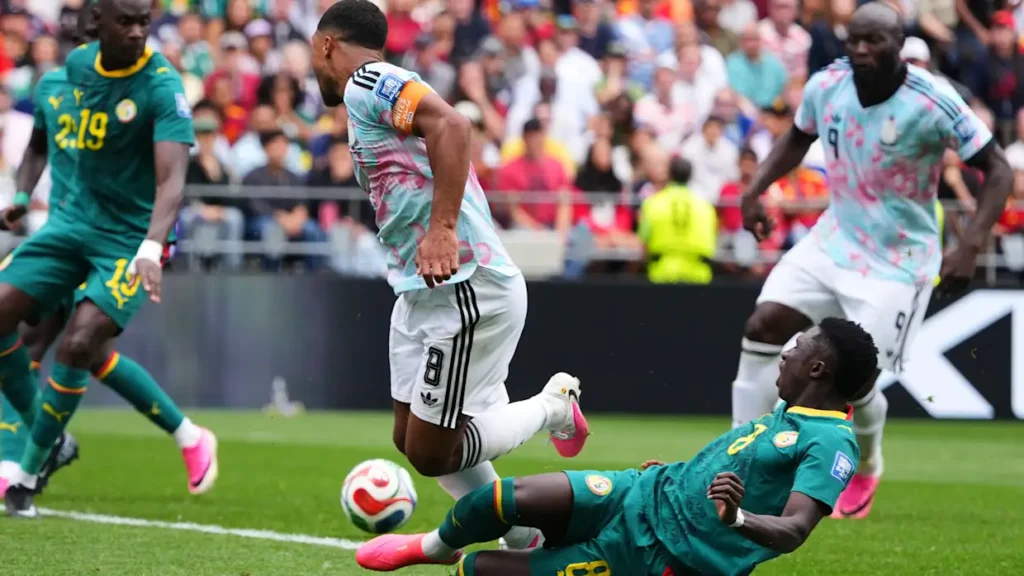
Belgium’s win over Senegal was one of the most dramatic matches of the knockout stage so far. Senegal looked close to forcing the game towards penalties, but everything changed late in extra time when Belgium were awarded a penalty after a VAR review.
The key moment involved Youri Tielemans and Lamine Camara inside the penalty area. The referee did not immediately point to the spot, but VAR advised him to check the incident on the monitor. After reviewing the footage, the referee awarded Belgium a penalty. Tielemans stepped up and scored, sending Belgium through and ending Senegal’s World Cup run in painful fashion.
From Belgium’s point of view, it was a clear penalty. Tielemans appeared to be caught as he moved inside the area, and the contact affected his ability to continue the action. From Senegal’s point of view, it was a very harsh call at a massive moment of the match. Their frustration is understandable, especially because the decision came so late and gave them almost no time to recover.
This is exactly why VAR remains so controversial. The technology can show contact, but it cannot always settle the argument over whether that contact is enough for a foul.
Was the Belgium penalty correct?
The first thing to understand is that not every contact inside the penalty area is a penalty. Football is a contact sport. Referees must decide whether the challenge is careless, reckless, or uses excessive force. For a penalty, the contact must be enough to unfairly stop or affect the opponent.
In this case, the referee likely judged that Camara’s contact on Tielemans was enough to trip or impede him. Once the referee reached that conclusion after watching the monitor, the penalty became supportable under Law 12.
The more difficult question is whether VAR should have intervened.
VAR is not supposed to re referee every small contact. It should only intervene for a clear and obvious error. That is where the debate starts. If the referee had a clear view and simply judged the contact as not enough, some fans will argue VAR should have stayed out. If the referee missed the exact point of contact or did not understand how much Tielemans was affected, then VAR had a reason to recommend a review.
For The VAR Verdict, the best conclusion is this: the penalty can be defended by the Laws of the Game, but the intervention threshold is the real controversy. The decision was not about whether contact existed. It was about whether that contact was enough for VAR to send the referee to the monitor in the final moments of a knockout match.
Senegal will feel robbed, but Belgium showed character
Senegal’s anger is easy to understand. Losing a World Cup knockout match to a penalty after a late VAR check is one of the most painful ways to go out. Their players believed the decision was soft, and many neutral fans will probably agree with them.
But Belgium also deserve credit. They were under pressure, they fought back, and Tielemans handled a huge pressure moment with calmness. For Belgium, this will be remembered as a comeback full of belief. For Senegal, it will be remembered as the night VAR ended their tournament.
That contrast is what makes the incident so powerful for football debate.
USA vs Bosnia: Balogun scores, then sees red
The second major VAR controversy came in USA vs Bosnia and Herzegovina. The United States won 2 to 0 and advanced to the next round, but the match changed when Folarin Balogun was sent off after a VAR review.
Balogun had already made a major impact by scoring for the United States. He looked dangerous, confident, and central to the American attack. Then came the incident that changed the tone of the night.
After a challenge involving Tarik Muharemovic, VAR reviewed the contact and the referee eventually showed Balogun a straight red card. The decision means Balogun will miss the next match against Belgium, which is a huge blow for the USA.
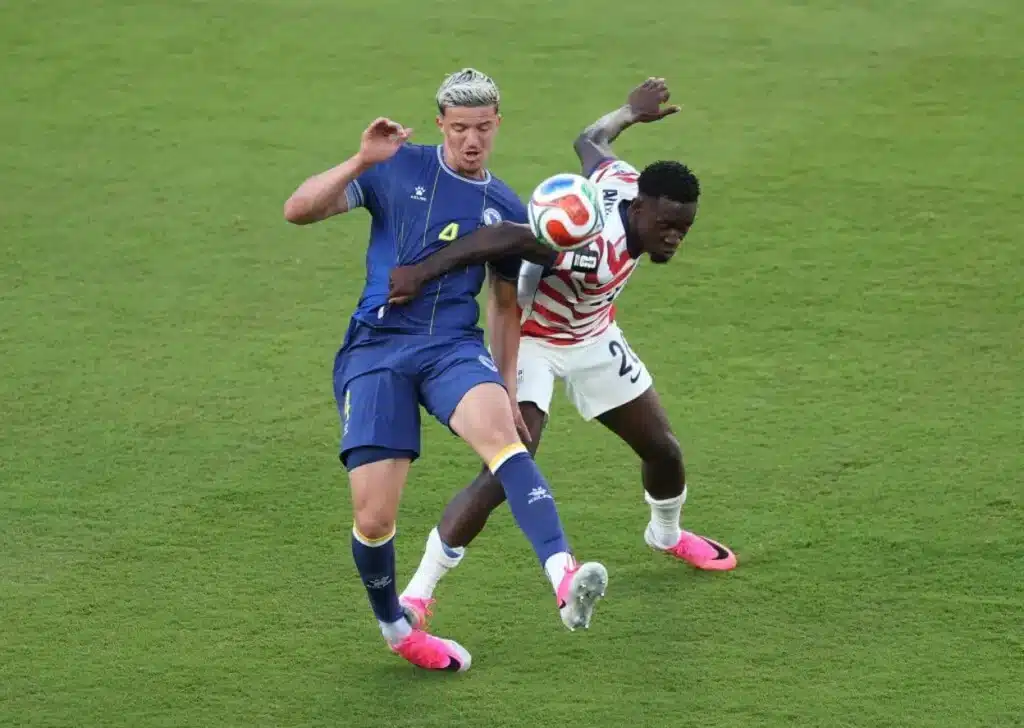
The referee judged the action as serious foul play. The debate is whether Balogun deliberately endangered his opponent, or whether the contact was accidental during a normal football action.
Was Balogun’s red card correct?
Under Law 12, a player can be sent off for serious foul play if he uses excessive force or endangers the safety of an opponent when challenging for the ball. Intent is not the only factor. A player can still be sent off even if he does not mean to hurt the opponent.
That is important here. Many USA fans are saying Balogun did not mean it. That may be true, but referees do not only judge intention. They also judge the point of contact, the force, the risk to the opponent, and whether the player had control of his movement.
If Balogun’s foot landed high on the opponent’s ankle with force, VAR had a reason to check for serious foul play. From that angle, the red card can be explained.
But the controversy is also fair. Slow motion can make accidental contact look worse than it really is. When a player is moving naturally and contact happens after the ball has gone, the referee must be careful not to punish the result more than the action itself. That is why many people believe the red card was too harsh.
The strongest argument against the decision is that the action looked more accidental than violent. The strongest argument for the decision is that the contact endangered the opponent’s safety, regardless of intent.
Why this red card hurts the USA so much
The United States still won the match, which shows maturity and control. Playing knockout football with ten men is never easy, but they stayed organized and finished the job.
However, the red card creates a major problem for the next round. Balogun has been one of the USA’s most important attacking players in the tournament. Losing him against Belgium changes the tactical picture completely.
Without Balogun, the USA may need to adjust their attacking structure. They lose speed, direct running, penalty area movement, and confidence in front of goal. Belgium, meanwhile, will know they are facing a dangerous host nation, but one missing a key forward because of a VAR decision.
That makes this red card more than a match incident. It could influence the next knockout tie too.
Two matches, one bigger VAR problem
Belgium vs Senegal and USA vs Bosnia showed two different sides of VAR.
In Belgium vs Senegal, VAR intervened on a penalty decision where the main debate was whether the contact was enough. In USA vs Bosnia, VAR intervened on a red card decision where the main debate was whether accidental contact should be treated as serious foul play.
Both incidents were subjective. Both involved interpretation. Both were technically reviewable. And both left fans divided.
That is the reality of modern VAR. It can help with factual decisions like offside, goal line checks, and mistaken identity. But when it comes to penalties, fouls, and red cards, the final decision still depends on human judgment.
VAR does not remove controversy. It simply moves the controversy from the referee’s first decision to the referee’s final decision after review.
The VAR Verdict
For Belgium vs Senegal, the penalty decision is defensible if the referee judged that Camara’s contact clearly impeded Tielemans. The bigger question is whether the incident was clear enough for VAR to intervene so late in extra time.
Verdict: Supportable penalty, but a debatable VAR intervention.
For USA vs Bosnia, Balogun’s red card can be justified under Law 12 if the referee believed the contact endangered the opponent’s safety. But because the action looked accidental and the use of slow motion may have made it appear worse, the decision will remain controversial.
Verdict: Understandable red card by the law, but harsh in football context.
The biggest takeaway is simple. VAR is not only about seeing what happened. It is about deciding what football expects from the referee in that moment. Belgium benefited from that interpretation. The USA survived it. Senegal and Balogun will feel punished by it.
And as the World Cup moves deeper into the knockout stage, these are exactly the decisions that will shape the tournament.

0 Comments
Join the conversation with respect. Comments are moderated and must follow our community rules.
Want to join the discussion?
Please log in or create an account to comment and reply. This keeps the conversation cleaner and safer.