
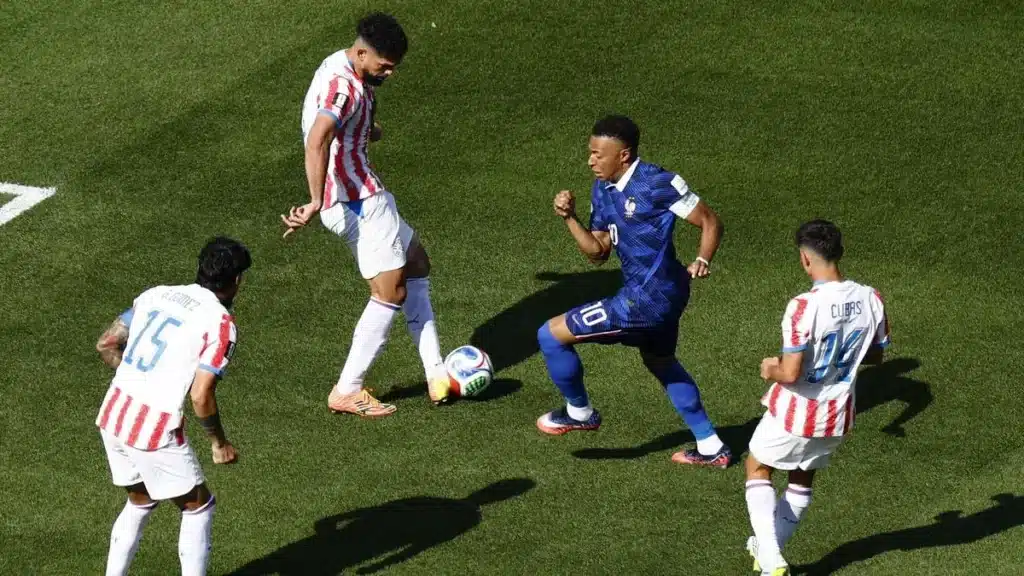
The World Cup Round of 16 produced two very different refereeing performances. While Michael Oliver quietly managed Morocco’s comfortable victory over Canada, Ilgiz Tantashev endured one of the most difficult evenings of the tournament during France’s narrow 1-0 win over Paraguay. The contrast between the two officials could hardly have been greater. One allowed the football to remain the main story. The other became part of the discussion.
France vs Paraguay referee analysis
Uzbek referee Ilgiz Tantashev faced enormous pressure from the opening whistle. Paraguay defended aggressively, committed repeated tactical fouls and constantly attempted to disrupt France’s rhythm. Matches like these demand outstanding foul recognition, strong disciplinary control and decisive leadership. Unfortunately, the referee never appeared fully comfortable.
Missed penalty corrected by VAR
The biggest decision came when France appealed for a penalty after Désiré Doué was brought down inside the area. Initially, play continued. Only after a VAR review did Tantashev award the penalty that Kylian Mbappé converted for the winning goal. Although the final decision was correct, elite referees are expected to recognise this type of foul without requiring video assistance. VAR successfully corrected the mistake, but the original on field decision raised questions.
Inconsistent disciplinary control
Throughout the match, the disciplinary line often lacked consistency. Several similar challenges produced different outcomes, creating frustration for both teams. France repeatedly complained that tactical fouls were not punished quickly enough, while Paraguay believed some physical duels were being judged too harshly. A referee does not need to call every foul, but players must clearly understand where the line has been drawn. That consistency was missing for long periods.
Possible violent conduct incident
One of the most debated moments involved an incident where Jules Koundé appeared to be struck in the face during an off the ball confrontation. The match continued without any disciplinary action, despite television replays generating significant discussion after the game. Whether the incident met the threshold for violent conduct is open to interpretation, but it was certainly the type of situation many expected VAR to examine more closely.
Match management
Beyond the key decisions, communication also became an issue. The match frequently stopped because of arguments, delays and repeated complaints. An experienced referee can often calm these situations before they escalate. Instead, frustration gradually increased as the game progressed.
Referee rating
Ilgiz Tantashev: 5.8/10
The correct penalty was eventually awarded thanks to VAR, but the overall performance lacked confidence and consistency. The referee struggled to establish authority in one of the tournament’s most demanding knockout matches.
Morocco vs Canada referee analysis
English referee Michael Oliver delivered a performance that demonstrated why FIFA continues to trust him in major tournaments. Morocco defeated Canada 3-0 in a match that never became dominated by officiating. That is usually the best compliment a referee can receive.
Strong disciplinary management
Oliver recognised early that the match would be physical. He issued yellow cards when necessary, established a clear disciplinary standard and never allowed emotions to take control. Players quickly understood what would and would not be accepted.
Excellent positioning
Throughout the match, Oliver maintained excellent positioning around the penalty area and transition moments. His movement allowed him to make confident decisions without depending on VAR. The technology remained in the background because the referee’s own judgement was consistently accurate.
Referee rating
Michael Oliver: 8.8/10
Another composed World Cup performance from one of the tournament’s most reliable officials. Calm communication, consistent foul recognition and excellent match control allowed football to remain the main attraction.
Final Verdict
The two Round of 16 matches highlighted exactly what separates an average refereeing performance from an excellent one. Michael Oliver showed authority without becoming the centre of attention. His calm management allowed Morocco and Canada to decide the match through football.
Ilgiz Tantashev experienced the opposite. The missed penalty that required VAR intervention, inconsistent foul recognition and uncertain disciplinary management meant the referee became one of the main talking points after France’s victory.
As the World Cup reaches the quarter finals, FIFA will expect a higher level of consistency. Every remaining match carries enormous importance, and the margin for refereeing error is now smaller than ever.

0 Comments
Join the conversation with respect. Comments are moderated and must follow our community rules.
Want to join the discussion?
Please log in or create an account to comment and reply. This keeps the conversation cleaner and safer.