
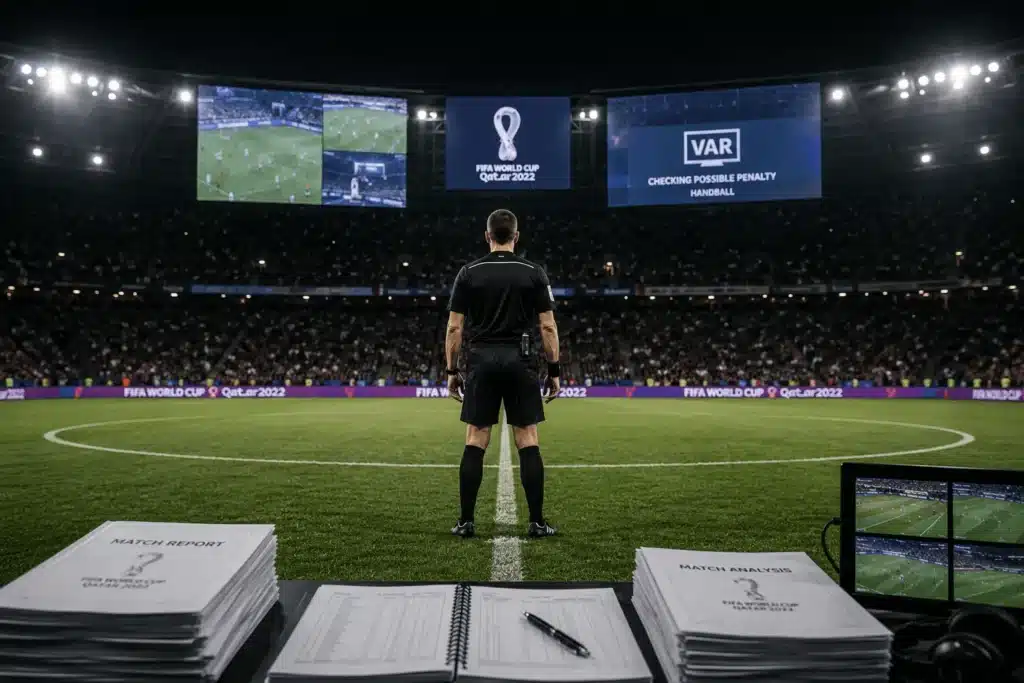
How Much Do World Cup Referees Earn? FIFA Match Fees, Salaries and Bonuses Explained
When football fans discuss the FIFA World Cup, the focus is usually on the players, managers and trophy contenders. Yet every match also depends on another elite group operating under enormous pressure: the referees. A single decision can influence the outcome of a match watched by millions around the world. With that level of responsibility, many fans naturally ask the same question: how much do World Cup referees actually earn? The answer may surprise some supporters. While World Cup referees are well compensated, they do not earn anything close to the salaries of the tournament’s biggest stars.
FIFA Selects Only the Elite
Reaching a World Cup is the pinnacle of a referee’s career. Officials must first establish themselves in their domestic leagues before earning FIFA badges and gaining experience in international competitions such as continental championships, youth tournaments and club competitions. By the time they arrive at a World Cup, referees have already undergone years of assessments, fitness testing and performance reviews. Only a small percentage of the world’s referees are selected.
How Much Are World Cup Referees Paid?
While FIFA does not always publish official salary figures for every tournament, multiple reports over recent World Cups indicate that referees receive both a tournament preparation fee and match payments.
Recent estimates suggest:
- Referees can receive approximately $50,000 to $70,000 for participating in the tournament.
- Additional match fees can range from roughly $3,000 to $10,000 per game depending on the stage of the competition.
- Officials appointed to knockout matches and the final generally receive the highest compensation.
As a result, a referee who progresses deep into the tournament and receives several appointments can earn well into six figures during a World Cup cycle.
What About VAR Officials?
The introduction of Video Assistant Referees has created an additional team of elite officials. VAR officials undergo the same rigorous preparation process as on-field referees and carry significant responsibility during matches. Although exact figures vary, VAR officials are generally believed to receive lower match fees than the referee on the pitch, but they are still among the highest-paid match officials in world football. Their role has become increasingly important as VAR reviews now influence penalty decisions, red cards, mistaken identity incidents and offside calls.
The World Cup Final: Football’s Most Prestigious Refereeing Assignment
For referees, being appointed to the World Cup Final is equivalent to a player lifting the trophy. Only one referee receives the honour every four years.
The selection is based on:
- Accuracy of decisions
- Match control
- Player management
- Fitness levels
- VAR cooperation
- Consistency throughout the tournament
The financial reward is significant, but the prestige often matters even more. Many former officials describe a World Cup Final appointment as the crowning achievement of their careers.
Why FIFA Pays Elite Referees Well
Modern refereeing requires far more than simply enforcing the Laws of the Game. Officials spend years preparing physically and mentally. During a World Cup they live in controlled environments, attend daily briefings, review incidents, complete fitness sessions and participate in extensive performance analysis. Every major decision is scrutinised by FIFA assessors, broadcasters, media outlets and supporters worldwide. In many ways, World Cup referees face pressure levels comparable to players competing on the pitch.
Are World Cup Referees Full-Time Professionals?
The answer depends on the country. Many referees from Europe’s top leagues operate as full-time professionals. Others still combine officiating with careers outside football. Historically, World Cup referees have included teachers, police officers, engineers, lawyers and business professionals. However, the trend is increasingly moving toward full-time professional officiating as the demands of elite football continue to grow.
The Bottom Line
World Cup referees may not earn superstar player salaries, but they are rewarded for reaching the highest level of football officiating. With tournament payments, match fees and additional appointments, FIFA’s top officials can earn substantial sums during a World Cup. More importantly, they gain something money cannot buy: the opportunity to officiate on football’s biggest stage. As the 2026 World Cup continues, attention will naturally focus on goals, stars and title contenders. Yet behind every major moment stands a referee whose decisions can shape football history in a matter of seconds.

0 Comments
Join the conversation with respect. Comments are moderated and must follow our community rules.
Want to join the discussion?
Please log in or create an account to comment and reply. This keeps the conversation cleaner and safer.