
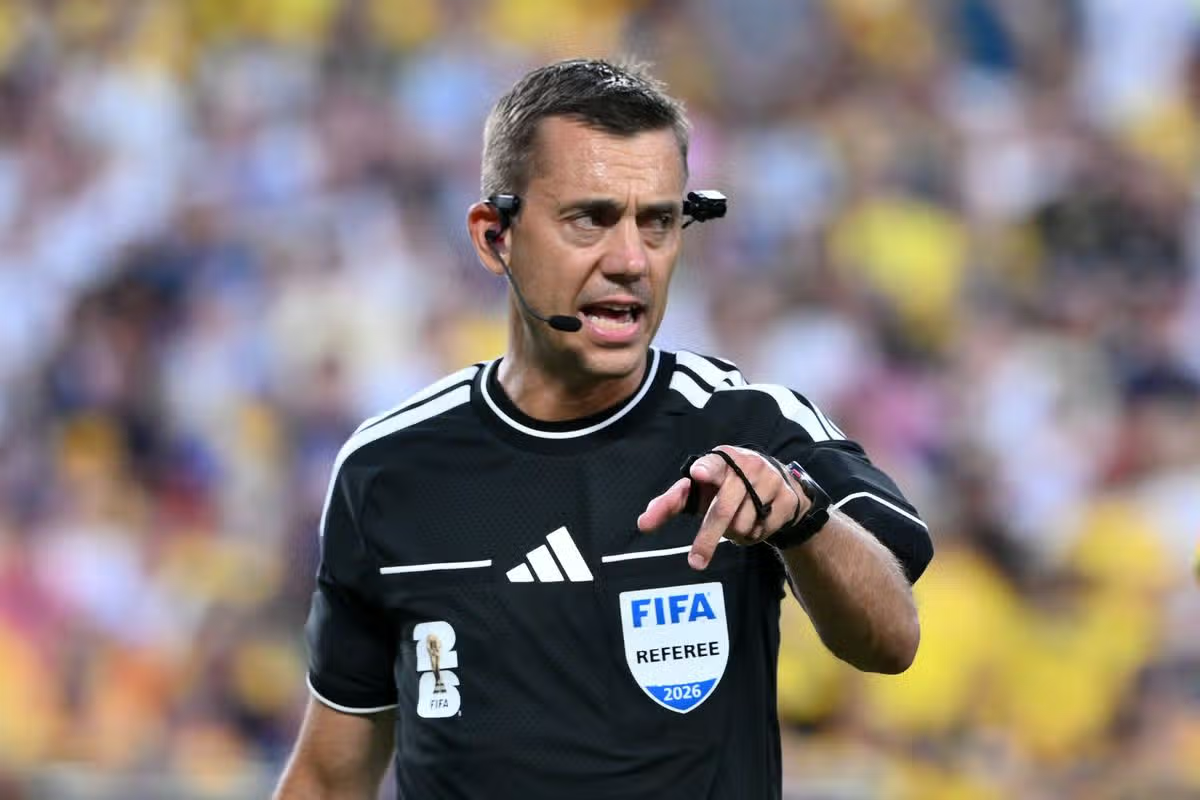
England reached the World Cup semifinals after a dramatic victory over Norway, but the match also produced several major refereeing incidents. French referee Clément Turpin was forced into two on-field reviews, while VAR played a decisive role in some of the biggest moments of the game. Overall, the officiating team handled the key incidents well, although one aspect of the match still raised questions.
No foul before Norway’s opening goal
The first controversial moment arrived before Norway’s opening goal when Harry Kane went to ground during the build-up. England appealed for a foul, but Turpin allowed play to continue and VAR quickly checked the incident.
After reviewing the available replays, the decision to allow the goal was correct. There was contact, but not enough to reach the threshold of a clear and obvious foul. Kane was not clearly denied possession illegally, so VAR was right not to recommend an on-field review.
VAR correctly disallows Norway’s second goal
Norway thought they had doubled their lead from a corner, but VAR spotted an important incident before the ball crossed the line. Erling Haaland clearly pushed Elliot Anderson, preventing the defender from challenging fairly for the ball.
Turpin reviewed the footage on the pitch-side monitor and immediately disallowed the goal. It was the correct decision, as attackers cannot create space by pushing an opponent immediately before a goal is scored.
Following the latest IFAB Laws, Norway were correctly allowed to retake the corner because the review took place after play had already restarted.
England’s late penalty correctly overturned
The biggest decision came deep into stoppage time when Turpin awarded England a penalty. Norway protested immediately, and VAR recommended another on-field review.
After watching the replay, Turpin cancelled the penalty. The footage showed that the England attacker committed the first foul before any possible defensive contact. Once that attacking foul was identified, the penalty could no longer stand.
This was an excellent intervention by the VAR team and another example of the technology correcting a clear on-field mistake.
Offside consistency remains an issue
One area that still caused confusion was the application of the delayed offside flag. On several occasions, obvious offside attacks were allowed to continue for a long time before the assistant referee raised the flag. Yet in other, much tighter situations, play was stopped almost immediately.
FIFA instructs assistant referees to delay the flag whenever there is a potential goalscoring opportunity, but consistency is important. Similar situations should be treated in the same way to avoid unnecessary confusion for players and supporters.
Referee Rating
Clément Turpin – 8.6/10
Turpin faced several difficult decisions and ultimately reached the correct outcome on every major incident. Although his initial penalty decision proved incorrect, he accepted VAR’s recommendation and changed his decision after reviewing the footage. His overall control of the match was calm and authoritative.
The VAR Verdict
This was another strong example of VAR working as intended. Both on-field reviews resulted in the correct final decisions, and the officials successfully dealt with two of the match’s biggest moments.
The only criticism concerns the inconsistent use of delayed offside flags. Apart from that, Clément Turpin delivered a very good performance in one of the most demanding quarterfinals of the tournament.

0 Comments
Join the conversation with respect. Comments are moderated and must follow our community rules.
Want to join the discussion?
Please log in or create an account to comment and reply. This keeps the conversation cleaner and safer.