
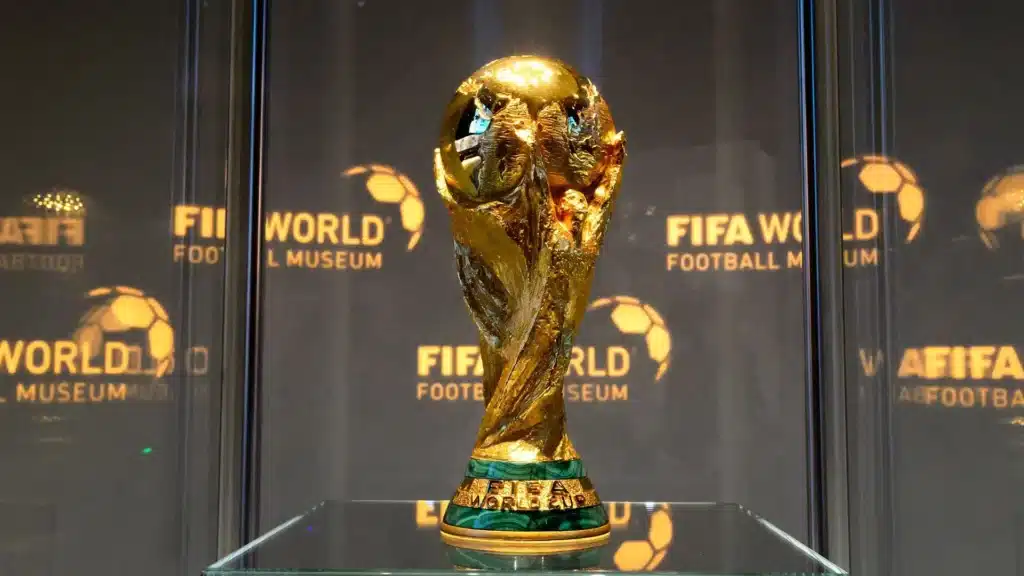
The 2026 FIFA World Cup Final referee has not yet been officially announced, but the appointment race has entered its decisive stage. Spain have secured the first place in the final after defeating France 2–0, while FIFA must wait for the outcome of England against Argentina before confirming which referees remain fully eligible for the tournament’s biggest match.
FIFA began the tournament with 52 referees, 88 assistant referees and 30 video match officials. The original selection was based on what FIFA described as a quality first principle, with consistency in domestic, international and previous FIFA competitions all considered. Those assessments have continued throughout the World Cup, meaning reputation alone will not determine the final appointment.
When Will FIFA Announce the 2026 FIFA World Cup Final Referee?
FIFA has not confirmed an exact announcement time. The identity of the second finalist will be important because nationality and neutrality considerations can immediately remove officials from contention.
The final referee team is expected to include the referee, two assistant referees, a fourth official, a reserve assistant referee and the complete VAR group. Until FIFA publishes that appointment, reports naming a definite referee should be treated as prediction rather than confirmation.
The safest editorial approach is to update this page as soon as FIFA releases the official team rather than publishing an unverified name.
How FIFA Selects the World Cup Final Referee
The FIFA Referees Committee studies every tournament performance in detail. Major decisions naturally matter, but the evaluation goes much further. Match control, positioning, fitness, communication, disciplinary consistency, cooperation with assistant referees and the quality of VAR management all influence whether an official remains in contention.
FIFA confirmed before the tournament that its selected officials had been monitored for more than three years through seminars, fitness programmes and performances in domestic and international competitions. Referees have also continued to train and receive match specific preparation during the World Cup.
A referee can therefore produce several correct major decisions and still miss the final if FIFA identifies concerns in smaller areas such as foul recognition, positioning or player management. Equally, a referee who avoids controversy but controls matches consistently may become a stronger candidate than a more famous official.
Neutrality Will Shape the Appointment
Nationality is one of the most important factors in selecting the 2026 FIFA World Cup Final referee. FIFA will not appoint an official from the same national association as one of the finalists.
Reports also indicate that officials from the four semifinal nations were removed from the remaining appointment pool once those countries reached the last four. That affected referees connected to England, Argentina, Spain and France.
The identity of Spain’s opponent will therefore determine the final group of eligible officials. FIFA will also consider whether a referee has already handled one of the finalists, how recently that appointment occurred and whether another selection could create unnecessary questions about neutrality.
Why Michael Oliver Is Out of the Race
Michael Oliver had built a strong case during the tournament, taking charge of four matches, including Spain’s quarterfinal victory over Belgium. That appearance took his career total to seven World Cup matches, setting a new record for an English referee.
However, England’s progress to the semifinal ended his realistic chances of receiving the final. FIFA’s neutrality approach prevents English officials from being used while England remain involved, and reports also point to additional sensitivity around English and Argentine appointments.
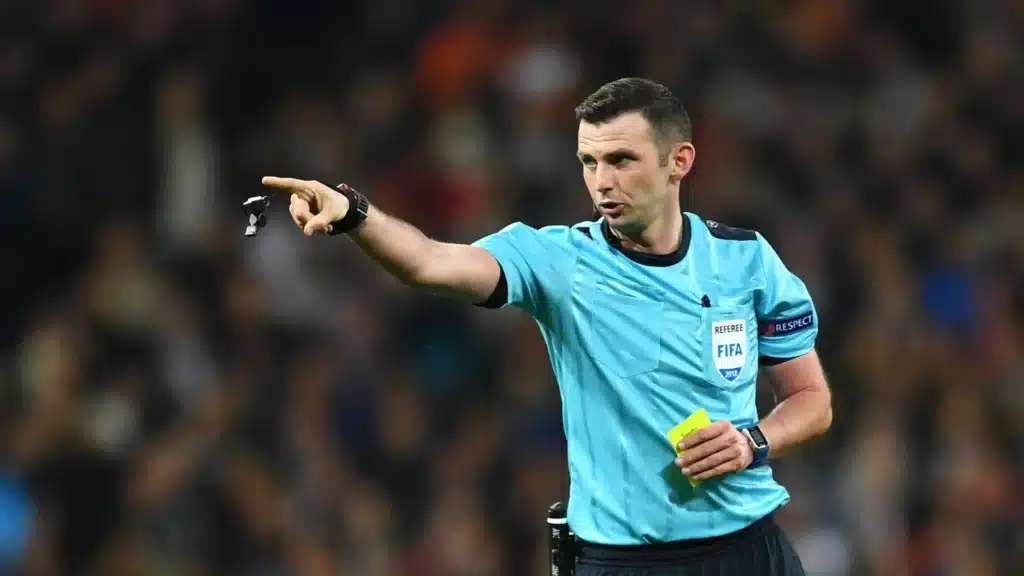
This does not represent a punishment or a negative assessment of Oliver’s performances. It is an eligibility issue created by the teams that reached the final stages.
Are Iván Barton and Ismail Elfath Still Candidates?
Iván Barton refereed Spain’s semifinal victory over France, while Ismail Elfath was appointed to England against Argentina. Receiving a semifinal normally makes a second major appointment less likely because FIFA often distributes the final stages among different referee teams.
It is not an absolute prohibition, but recovery time, previous assignments and the availability of other elite officials make a semifinal to final combination unusual.
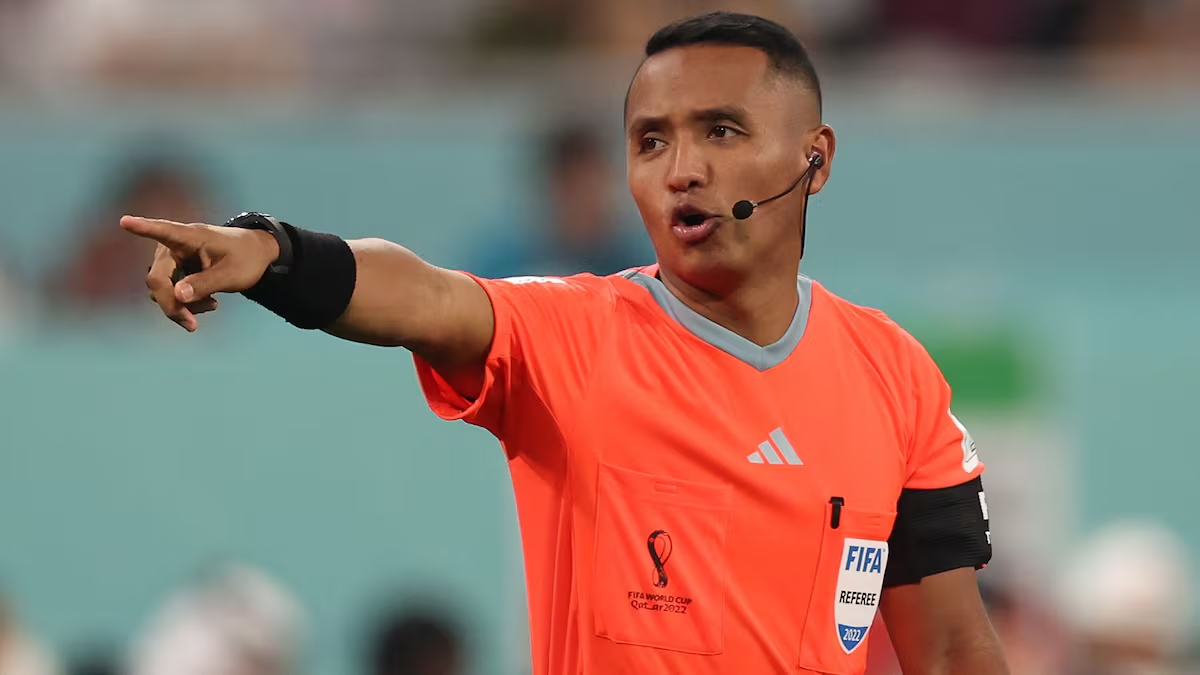
Their semifinal performances may still influence other appointments, including the third place match, fourth official role or VAR related selections.
Who Are the Leading World Cup Final Referee Candidates?
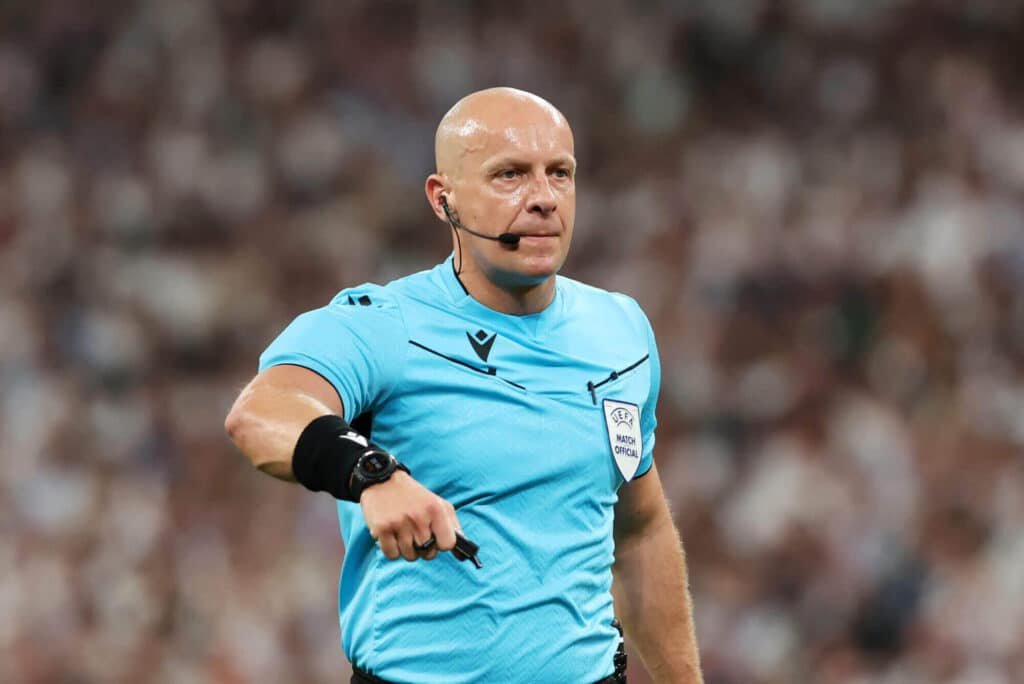
FIFA has not publicly released an official ranked shortlist for the final. Reports concerning the reduced tournament pool have mentioned experienced officials including Szymon Marciniak, Alireza Faghani, Espen Eskås and Maurizio Mariani among referees retained for the closing stages. However, being retained does not confirm that an official is a finalist for the appointment.
Marciniak would attract attention because of his experience at the highest level, while Faghani has built a long career in major FIFA competitions. The final decision will still depend on previous appointments, the second finalist, FIFA’s internal assessments and the availability of each referee’s full assistant team.
For that reason, naming one clear favourite before the second semifinal ends would be premature.
Previous Appointments Could Matter
FIFA generally tries to avoid appointing the same referee to the same team repeatedly unless there is a strong reason to do so. A previous match involving Spain or the second finalist would not automatically disqualify an official, but it could influence the final decision.
The committee must also consider the performance of the complete referee team. Assistant referees work as established units with the central referee, so the quality, fitness and tournament history of the entire trio matter.
A referee may be individually suitable but lose the appointment if FIFA prefers another team with stronger overall tournament assessments.
The VAR Team Is Just as Important
The World Cup Final appointment is no longer only about the referee. The VAR and assistant VAR officials will be responsible for supporting decisions involving goals, penalties, direct red cards and mistaken identity.
FIFA confirmed before the tournament that connected ball technology, advanced semi automated offside technology and goal line technology would all support the officials. The organisation also introduced the latest approved adjustments to the VAR protocol during the competition.
The final VAR team must therefore combine technical experience with the discipline to intervene only when the protocol requires it. FIFA will want a referee and VAR group that share the same threshold for contact, handball, serious foul play and penalty incidents.
What FIFA Will Want From the Final Referee
The ideal final referee will not necessarily be the official with the biggest public reputation. FIFA will want someone who has shown clear decision making, emotional control and consistency throughout the tournament.
The referee must be able to manage confrontation without interrupting the match unnecessarily, identify tactical fouls early and maintain the same threshold for both teams. Strong cooperation with assistants and VAR will be essential because one major incident could define the final.
Above all, FIFA will want the match to be remembered for the football rather than the officiating.
VAR Verdict
The 2026 FIFA World Cup Final referee remains unconfirmed, and the outcome of England against Argentina will help determine the final group of eligible officials. Michael Oliver and referees connected to the semifinal nations are no longer realistic options, while officials retained for the closing stages remain under assessment.
At this point, any single name presented as confirmed would be misleading. FIFA’s decision will be based on tournament performance, neutrality, previous appointments, fitness and the strength of the complete referee team.
Current status: No official final referee appointment.
Leading factors: Neutrality, tournament ratings, previous assignments and referee team performance.
Best prediction: FIFA will select a neutral official who did not referee either semifinal and whose tournament performances have remained consistent and free from major controversy.

0 Comments
Join the conversation with respect. Comments are moderated and must follow our community rules.
Want to join the discussion?
Please log in or create an account to comment and reply. This keeps the conversation cleaner and safer.