
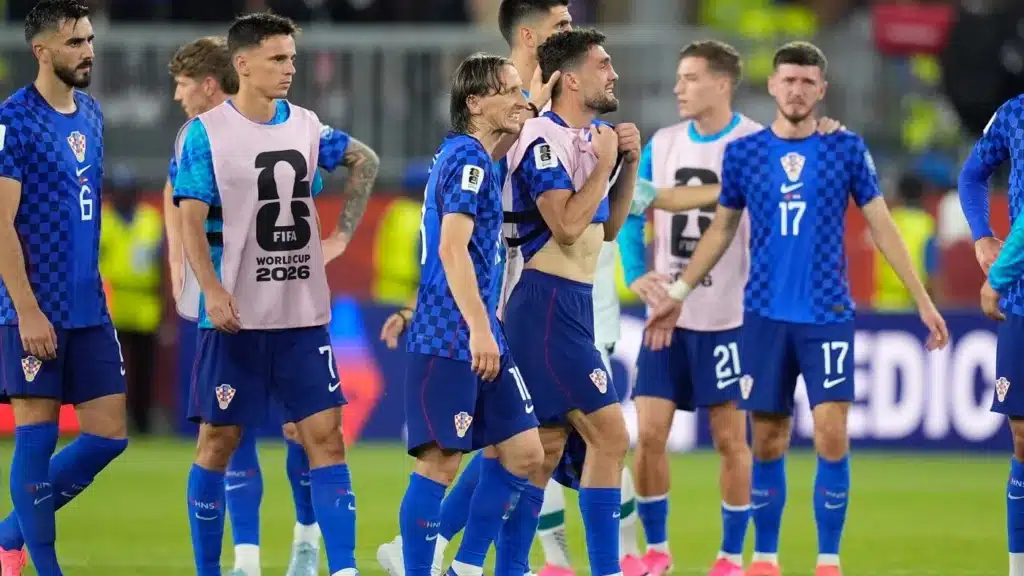
Croatia demands FIFA release VAR audio following one of the most controversial refereeing moments of the 2026 FIFA World Cup. The Croatian Football Federation has publicly renewed its request for the governing body to publish the conversations between the referee and the Video Assistant Referee during Croatia’s Round of 32 defeat to Portugal, arguing that greater transparency would help restore confidence in the officiating process.
The federation has stated that it is not asking FIFA to replay the match or change the result. Instead, it wants supporters, players and football officials to understand how the refereeing team reached one of the tournament’s most debated decisions. According to Croatian officials, releasing the VAR communication would provide clarity and help answer questions that have remained unanswered since the final whistle.
Why Croatia Demands FIFA Release VAR Audio
The request comes after weeks of discussion surrounding the key incident against Portugal. Croatia believes the available television replays do not fully explain why the referee reached the final decision or how the VAR team interpreted the incident.
The federation has reportedly sent an official request to FIFA but says it has not received the detailed explanation it was hoping for. As a result, Croatia has now made its position public, increasing pressure on FIFA to explain whether the conversations between the referee and the VAR team can be released.
Croatia argues that transparency is becoming increasingly important as VAR continues to play a decisive role in the world’s biggest matches.
Does FIFA Normally Publish VAR Conversations?
The short answer is no.
Unlike several domestic competitions, FIFA does not routinely release the audio conversations between referees and VAR officials after World Cup matches. While supporters see the final decision and sometimes hear an announcement inside the stadium, the communication that leads to that decision usually remains confidential.
Other competitions have taken a different approach. Major League Soccer and Australia’s A League have previously published selected VAR audio to explain controversial incidents and educate supporters about the decision making process.
Those examples have strengthened the argument that football can become more transparent without undermining the authority of referees.
What Do The IFAB Laws Say?
The IFAB VAR Protocol explains how VAR should operate during a match but does not require competitions to publish conversations afterwards.
The protocol allows VAR to intervene only in four specific categories.
Goals and offences leading to goals.
Penalty incidents.
Direct red cards.
Mistaken identity involving disciplinary sanctions.
Once an incident falls within one of those categories, the VAR team checks the footage and communicates directly with the referee. Whether that communication is later released to the public is entirely a matter of competition policy rather than the Laws of the Game.
In other words, FIFA is under no legal obligation to publish the audio.
Would Releasing The Audio Improve Trust?
Many former referees believe it would.
Listening to the discussion between the referee and VAR often helps supporters understand what the officials actually saw, which replay angles they considered and why they decided to confirm or change the original decision.
It also demonstrates that many decisions involve careful analysis rather than instant judgement.
However, there are also concerns. Referees need to communicate openly during reviews. If every conversation is expected to become public, officials may become more cautious in their language, potentially affecting the quality of communication during important decisions.
FIFA therefore has to balance transparency with protecting the effectiveness of the refereeing process.
Why This Story Matters Beyond Croatia
The Croatian federation’s request reflects a wider debate taking place across world football.
As VAR technology becomes more advanced, supporters increasingly expect greater openness from governing bodies. Many fans no longer accept being told that “the decision has been checked” without understanding how that conclusion was reached.
Football has already moved towards greater transparency by introducing referee announcements after certain VAR reviews during the 2026 World Cup. Publishing referee audio could become the next step if FIFA believes it would strengthen confidence in the system.
Whether that happens remains uncertain, but Croatia’s request has ensured the discussion will continue long after this tournament ends.
VAR Verdict
The fact that Croatia demands FIFA release VAR audio does not mean the original refereeing decision was necessarily incorrect. Instead, it highlights a growing demand for greater transparency in elite football.
FIFA currently has no obligation under the IFAB Laws of the Game to publish referee communications, but doing so could help supporters better understand controversial decisions and reduce speculation after major matches.
The challenge for FIFA is finding the right balance between openness and protecting the decision making process that allows referees to perform their duties effectively.
Verdict: Croatia has raised a legitimate question about transparency rather than simply disputing the result of the match.
Key issue: Should FIFA begin releasing VAR audio after controversial World Cup decisions?
Our view: Greater transparency would benefit football, provided the conversations are published in full context and used to educate supporters rather than create new controversy.

0 Comments
Join the conversation with respect. Comments are moderated and must follow our community rules.
Want to join the discussion?
Please log in or create an account to comment and reply. This keeps the conversation cleaner and safer.