
The latest Champions League referee review focuses on one likely missed red card and several important VAR interventions from Tuesday’s second qualifying round second legs.
The clearest apparent refereeing error occurred during Lincoln Red Imps’ goalless draw with Mjällby, where Jeppe Kjær escaped with only a yellow card after making dangerous contact with an opponent’s calf. Elsewhere, VAR played a major role in Dinamo Zagreb’s dramatic comeback against FC Thun, correctly cancelled a Sturm Graz goal against Hearts and conducted a lengthy check during Shamrock Rovers’ elimination by Ararat-Armenia.
Not every controversial intervention was an error. In fact, the evening demonstrated the difference between VAR correcting a major incident and VAR taking too long to confirm a decision that ultimately appeared correct.
Jeppe Kjær escapes likely red card against Lincoln Red Imps
The most serious missed decision came in Gibraltar during Lincoln Red Imps’ 0-0 draw with Mjällby.
Kjær was shown a yellow card in the 69th minute after catching an opponent with the sole of his boot. Swedish reports described the contact as studs into the back of the opponent’s calf, while Sportbladet analyst Siavoush Fallahi called it an obvious red-card offence. Match timelines confirm that the referee punished Kjær with only a caution.
This type of challenge must be assessed through several considerations: the point of contact, exposed studs, speed, force, control and the risk created for the opponent.
Law 12 states that a challenge which endangers an opponent’s safety or uses excessive force must be punished as serious foul play. A player who lunges at an opponent from the front, side or behind can therefore be sent off even when the challenge was an attempt to play the ball.
Based on the available footage and reports, the contact was high enough and dangerous enough to support a red card. The fact that Kjær’s boot reached the calf rather than landing only on the foot significantly strengthens the serious-foul-play argument.
Why should VAR have intervened?
A possible direct red card is one of the categories VAR is authorised to review.
The VAR protocol permits intervention when the on-field decision contains a clear and obvious error or when the referee has missed a serious incident. For subjective decisions involving the intensity of a tackle, an on-field review is normally appropriate.
Because the referee saw the challenge and showed yellow, VAR needed to decide whether that punishment was clearly insufficient. This is not a situation where video officials would be searching for a minor technical mistake. The difference between a reckless yellow-card challenge and serious foul play is a match-changing disciplinary decision.
The VAR Verdict: The yellow card was too lenient. The available evidence supports a red card for serious foul play, making this the clearest apparent error of Tuesday’s Champions League qualifiers.
Mjällby still progressed 3-0 on aggregate after the second leg finished goalless, but a dismissal could have affected the match and would also have ruled Kjær out of the next round.
Marco Bürki’s red card changes Dinamo Zagreb vs FC Thun
The most influential VAR intervention came in Zagreb, where FC Thun were leading Dinamo Zagreb 2-0 before Marco Bürki was dismissed in the 67th minute.
Reports from the match state that VAR upgraded the decision after Bürki stopped Lukas Kačavenda as the last defender. Thun were reduced to ten players, Dinamo scored in the 74th and 78th minutes, and the Croatian side eventually won 3-2 after extra time to progress 4-3 on aggregate.
The decision created debate because the passage followed a fair-play situation in which Dinamo had returned possession. However, that background does not remove Bürki’s responsibility once normal play has resumed.
The referee must assess the actual offence by considering:
- The distance between the offence and goal
- The direction of the attacking movement
- The attacker’s likelihood of controlling the ball
- The position and number of covering defenders
Those are the central Law 12 considerations for denying an obvious goalscoring opportunity.
Available reports describe Bürki as the final defender and Kačavenda as having a clear route into an attacking position. On that basis, the red card appears supportable.
It was also a legitimate incident for VAR to review because a possible direct red card for denying an obvious goalscoring opportunity falls directly within the protocol.
The VAR Verdict: Correct VAR intervention based on the available evidence. The circumstances surrounding the fair-play restart may have looked unusual, but they did not give Bürki permission to commit a DOGSO offence.
Sturm Graz goal correctly disallowed against Hearts
Sturm Graz thought they had taken the lead at Tynecastle in the 26th minute when Seedy Jatta put the ball into an empty net.
VAR reviewed the attacking phase and identified that Jatta had tripped Hearts defender Harry Milne before reaching the ball. The goal was subsequently cancelled. Hearts’ own match report and independent coverage both confirmed that the foul occurred before Jatta’s finish.
This was a textbook example of why VAR is permitted to examine the attacking phase before a goal.
A goal can be disallowed when the scoring team commits a foul during the move that directly leads to the goal. The trip gave Jatta the opportunity to move beyond Milne and reach the ball, so the offence was relevant rather than incidental.
There may have been some frustration because the goal was initially awarded and the review interrupted the match. However, the final outcome was correct.
The VAR Verdict: Correct VAR intervention. Jatta’s foul created the attacking advantage that led directly to the finish, meaning the goal could not stand.
Sturm Graz later won the match 2-0 and completed a 6-0 aggregate victory.
Lengthy review of Matt Healy’s goal in Dublin
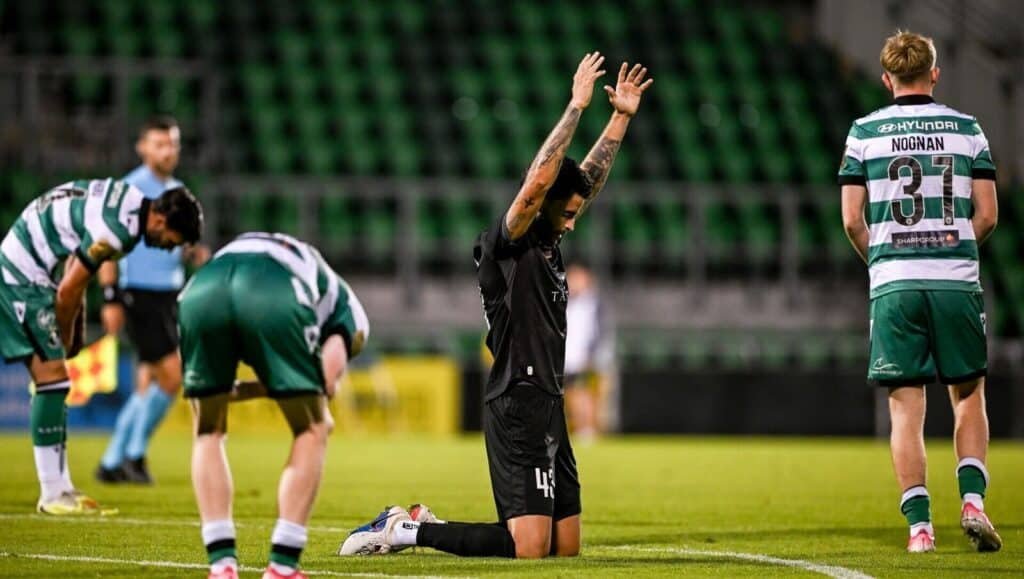
Shamrock Rovers made a remarkable start against Ararat-Armenia when Matt Healy scored in the opening stages of the match.
The goal was subjected to a lengthy VAR check before eventually being confirmed. Aaron Greene then scored Rovers’ second goal to level the tie on aggregate, but Sandro Lima’s second-half strike sent Ararat-Armenia through 3-2 overall despite losing the second leg 2-1.
There has been no strong evidence in the available reporting that Healy’s goal should have been disallowed. The criticism should therefore focus on the duration and communication of the check rather than the final decision.
UEFA recently reminded officials that VAR should intervene only when an on-field decision is blatantly incorrect or when the referee has missed a clear incident. UEFA also stressed that VAR is not intended to re-referee matches through prolonged examination of marginal details.
Long checks create uncertainty inside the stadium, particularly when supporters are given little information about what is being examined. Even when the correct outcome is eventually reached, an excessive delay can damage confidence in the process.
The VAR Verdict: The goal was correctly allowed based on the evidence available. The concern was the length of the check, not the final decision.
Why the Mjällby incident matters most
Among Tuesday’s incidents, the Kjær challenge deserves the greatest attention because it involved player safety.
The decisions in Zagreb and Edinburgh were significant, but VAR appears to have reached supportable outcomes. In Dublin, the process was slow, although the goal was eventually confirmed.
In Gibraltar, however, a challenge involving studs and contact on the calf received only a yellow card despite video technology being available to review a possible direct-red offence.
UEFA’s position is that VAR should not become involved in minor disagreements, but serious foul play is exactly the type of major incident the system was created to correct. A dangerous challenge should not remain a yellow card merely because the referee had a reasonable viewing position or initially interpreted the contact as reckless.
The clear-and-obvious threshold protects the authority of the on-field referee. It should not protect a decision when replays demonstrate that the safety of an opponent was endangered.
Overall referee and VAR verdicts
Lincoln Red Imps vs Mjällby
Jeppe Kjær challenge: Likely missed red card
VAR intervention required: Yes
Final verdict: Incorrect disciplinary outcome
Dinamo Zagreb vs FC Thun
Marco Bürki dismissal: Red card for DOGSO
VAR intervention required: Yes
Final verdict: Correct decision based on available evidence
Hearts vs Sturm Graz
Seedy Jatta disallowed goal: Attacking foul before the goal
VAR intervention required: Yes
Final verdict: Correct decision
Shamrock Rovers vs Ararat-Armenia
Matt Healy goal: Allowed after lengthy check
VAR intervention required: Routine goal check
Final verdict: Correct outcome, inefficient process
The VAR Verdict
This Champions League referee review produced one likely major error and two strong examples of VAR correcting important match-changing incidents.
The missed red card for Kjær was the clearest concern. The challenge appeared to endanger the opponent’s safety and should have led to an on-field review. A yellow card did not reflect the danger of the contact.
Bürki’s dismissal was dramatic and transformed the Dinamo Zagreb tie, but a decision is not wrong simply because it changes a match. If the defender denied an obvious goalscoring opportunity as the final defender, VAR was right to intervene.
The cancellation of Jatta’s goal was also correct because the attacking foul directly created the scoring opportunity. Healy’s goal in Dublin was eventually handled correctly, although the length of the review showed why UEFA wants faster and more disciplined use of technology.
Tuesday’s matches offered an important reminder: VAR works best when it corrects clear, match-changing errors quickly. The system becomes harder to defend when it misses a dangerous red-card challenge or takes several minutes to confirm a valid goal.

0 Comments
Join the conversation with respect. Comments are moderated and must follow our community rules.
Want to join the discussion?
Please log in or create an account to comment and reply. This keeps the conversation cleaner and safer.