
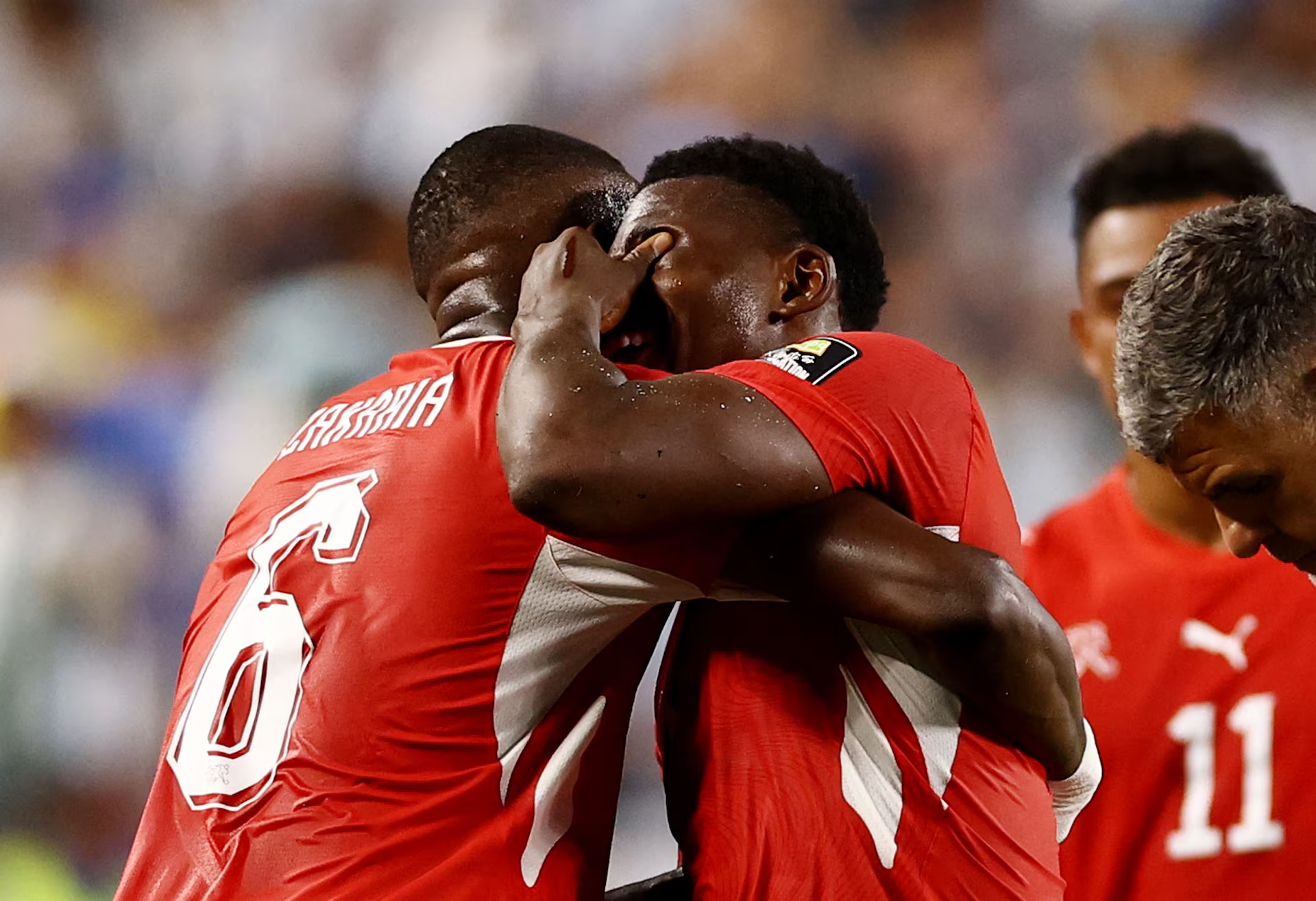
Switzerland’s World Cup quarterfinal defeat to Argentina was overshadowed by one of the most controversial VAR interventions of the tournament. Breel Embolo received a second yellow card after a review, leaving Switzerland with ten players and triggering strong criticism from the Swiss coaching staff.
Head coach Murat Yakin described the decision as unacceptable and demanded an explanation. However, from a refereeing perspective, the incident requires a careful reading of the Laws of the Game and the VAR protocol.
The Incident
In the second half, Embolo went to ground after a challenge involving Leandro Paredes. Referee João Pinheiro initially judged that Paredes had committed the offence and showed the Argentine midfielder a yellow card.
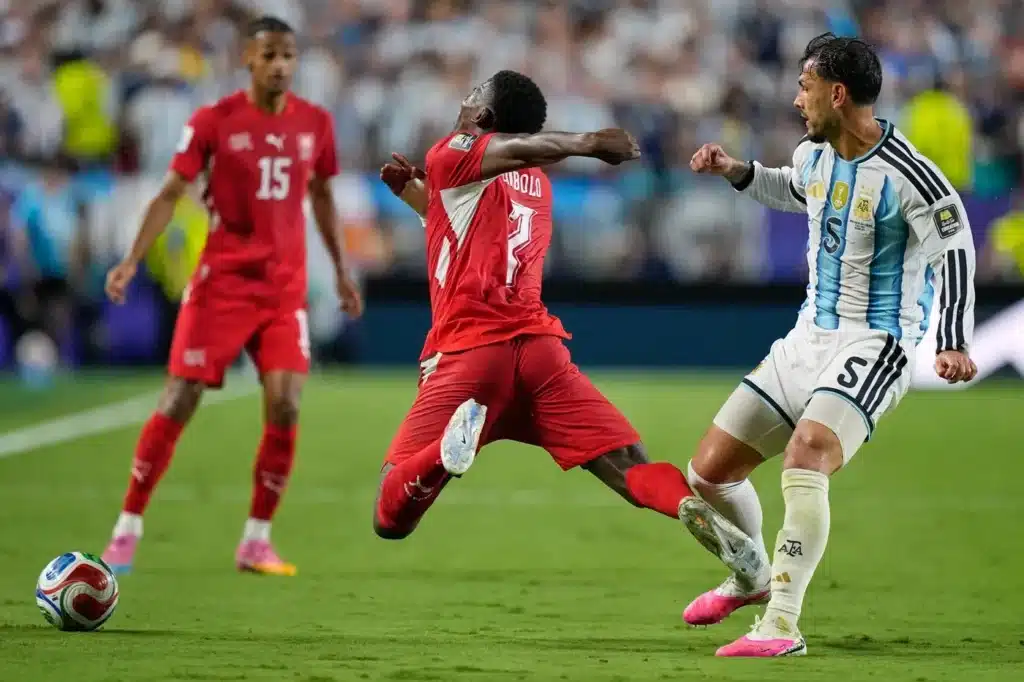
Before play restarted, the VAR checked the incident and advised the referee to review it. After watching the replay, Pinheiro cancelled the caution for Paredes and instead booked Embolo for simulation. Because Embolo had already been cautioned earlier in the match, the new yellow card resulted in his dismissal.
Why VAR Was Allowed to Intervene
Normally, VAR does not intervene simply to recommend a yellow card. The protocol is limited to goals, penalty incidents, direct red cards and mistaken identity. The key point in this case was mistaken identity. The referee had shown a disciplinary sanction to Paredes, but the video review indicated that Paredes had not committed the cautionable offence. According to the VAR team, Embolo was the player responsible for unsporting behaviour through simulation.
VAR therefore did not intervene only because it believed Embolo had dived. It intervened because the referee had sanctioned the wrong player. Once the review established that Embolo was the player who committed the offence, the referee was allowed to cancel Paredes’ caution and show the yellow card to Embolo.
Law 12 and Simulation
Simulation is covered under Law 12 as unsporting behaviour. A player must be cautioned when attempting to deceive the referee by pretending to have been fouled or exaggerating contact. For a simulation caution to be correct, the referee must be satisfied that the player attempted to create a false impression of an offence.
The main refereeing question is therefore not whether Embolo fell to the ground. The question is whether the available replay clearly showed that he attempted to deceive the referee.
If there was meaningful contact from Paredes, even if the contact was not enough for a foul, a simulation caution becomes more debatable. Contact does not automatically mean there was a foul, but it can make it harder to prove that the attacker deliberately attempted to deceive the referee. If the replay showed no meaningful contact and a clear attempt to win a free kick, the caution was technically justified.
Was the Second Yellow Reviewable?
A second yellow card is not normally reviewed by VAR in the same way as a direct red card. However, the VAR intervention in this incident was based on the original caution being shown to the wrong player. The resulting dismissal occurred because Embolo already had a yellow card.
In other words, VAR did not directly review a second yellow card. It corrected the identity of the player who should have received the original disciplinary sanction. This distinction is important because it explains how a VAR intervention could legally lead to a sending off even though second yellow cards are usually outside the review protocol.
Was the Decision Correct?
The procedure can be considered correct if the replay clearly proved two things.
First, Paredes did not commit the offence for which he was originally cautioned.
Second, Embolo clearly committed simulation.
If both conditions were met, the referee was entitled to cancel the first yellow card and caution Embolo instead.
However, the quality of the decision depends heavily on whether the evidence for simulation was clear and obvious. Simulation should not be punished merely because the contact was insufficient for a foul. The referee must identify an actual attempt to deceive. If there was visible contact and Embolo’s reaction was exaggerated rather than completely invented, the decision becomes far more controversial.
Why Switzerland Were Furious
Switzerland’s reaction was understandable because the dismissal had a major tactical impact on the match. A second yellow card changes the entire balance of a knockout game. Switzerland were forced to defend with ten players against one of the strongest attacking teams in the tournament.
The Swiss argument is likely to focus not only on whether the protocol allowed the intervention, but also on whether the evidence was strong enough to justify such a decisive punishment. In elite refereeing, VAR should only intervene when the mistake is clear. If the incident remains open to interpretation, the original on field decision should usually stand.
Referee Analysis
João Pinheiro followed the correct review process once the VAR recommended an on field review. He watched the footage, cancelled the caution for Paredes and issued a yellow card to Embolo. The more difficult assessment concerns the VAR threshold. Was the original decision clearly wrong, or was it simply a different interpretation of limited contact? That is the central question.
If the replay clearly showed simulation, the final decision was correct under Law 12 and the VAR protocol. If the footage only showed minor contact and an exaggerated fall, the intervention may have exceeded the clear and obvious threshold.
VAR Verdict
The procedure appears technically possible under the mistaken identity section of the VAR protocol.
The final decision can only be fully supported if Embolo’s simulation was clear and obvious.
The controversy is therefore not mainly about whether VAR could intervene. It is about whether the evidence justified changing a major disciplinary decision in a World Cup quarterfinal.
Verdict: Protocol potentially correct, but the simulation decision must meet a very high threshold.
Referee decision: Defensible if the replay clearly showed deception.
VAR intervention: Correct only if the original caution for Paredes was a clear error.
Main concern: Whether the evidence was strong enough to produce a second yellow card and dismissal.

0 Comments
Join the conversation with respect. Comments are moderated and must follow our community rules.
Want to join the discussion?
Please log in or create an account to comment and reply. This keeps the conversation cleaner and safer.