
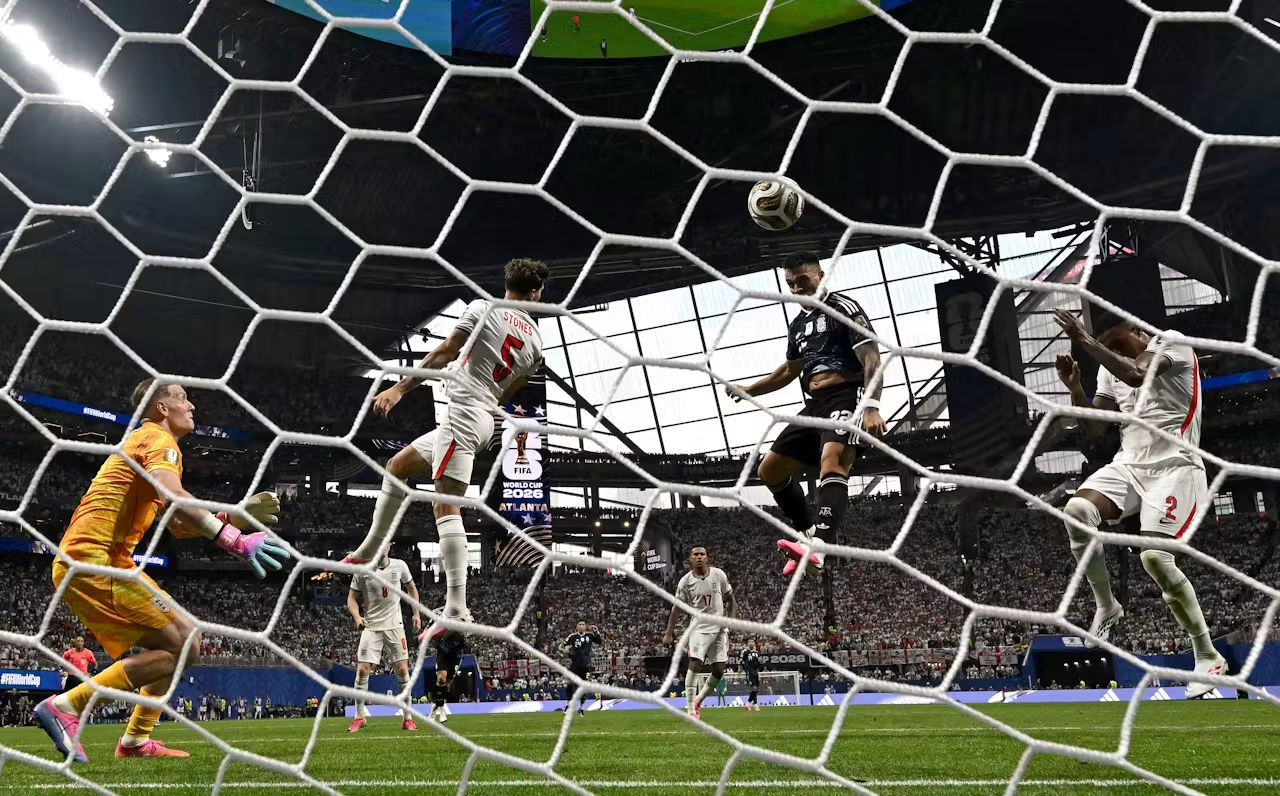
The second semifinal of the 2026 FIFA World Cup delivered another fascinating contest, with Argentina defeating England to book their place in the final against Spain. While the football attracted most of the attention, the officiating team led by American referee Ismail Elfath also faced enormous pressure, with every major decision expected to be examined in detail before the opening whistle.
Given the debate surrounding Argentina’s previous matches and the online discussion about VAR throughout the tournament, this was always going to be one of the most closely watched refereeing performances of the World Cup. FIFA placed its trust in Elfath and his team, knowing that consistency and calm decision making would be just as important as technical accuracy.
Strong Match Control From The Opening Minutes
From the first whistle, Ismail Elfath adopted a clear and consistent foul threshold. He allowed the game to flow where possible but reacted quickly whenever challenges crossed the line into careless or reckless territory.
One of the strengths of his performance was communication. Rather than relying immediately on disciplinary sanctions, Elfath used preventive refereeing, speaking to players early and making his expectations clear. This approach helped control emotions during a match that carried enormous pressure for both teams.
His positioning was also excellent throughout the evening. By maintaining good angles around the ball and anticipating transitions, he was able to make confident decisions without appearing rushed.
VAR Team Had A Quiet Night
Unlike several previous knockout matches, the VAR team was not required to become the main talking point.
Every goal, penalty appeal and disciplinary incident was checked through the standard silent review process, but none reached the threshold for an on field review. That should be viewed as a positive outcome rather than a lack of involvement.
VAR is designed to intervene only when there is a clear and obvious error or a serious missed incident. When the referee consistently makes correct decisions in real time, the video officials simply confirm those decisions and allow the game to continue.
The absence of lengthy reviews also helped maintain the rhythm of one of the tournament’s biggest matches.
Physical Contest Handled Consistently
England and Argentina both played with intensity, producing several strong challenges throughout the match.
The important factor was consistency.
Players quickly understood the referee’s threshold, reducing unnecessary protests and allowing the match to develop naturally. While supporters from both sides questioned individual fouls during the game, there were no major incidents that suggested the referee had lost control or applied different standards to each team.
Maintaining identical criteria for both teams is one of the biggest challenges in international football, particularly during a World Cup semifinal where every decision is magnified.
Assistant Referees And Teamwork
Elite officiating is never about one individual.
Corey Parker and Kyle Atkins provided strong support on offside decisions and general match management, while the fourth official ensured both technical areas remained under control.
The communication between the referee and his assistants appeared smooth throughout the match, allowing decisions to be made quickly and confidently without unnecessary delays.
This teamwork is often overlooked by supporters but remains one of the foundations of successful refereeing at FIFA tournaments.
Applying The IFAB Laws Correctly
The Laws of the Game require referees to distinguish between careless, reckless and excessive force when judging challenges.
Throughout the semifinal, Elfath applied those principles consistently. Careless fouls resulted in free kicks without unnecessary disciplinary action, while more tactical infringements were dealt with appropriately to protect the flow of the match.
Equally important was his management of player behaviour. The referee remained calm during confrontations and prevented minor disagreements from escalating into larger conflicts.
This style of officiating reflected FIFA’s expectation that referees should combine authority with effective communication.
Referee Performance Under Extraordinary Pressure
The appointment itself attracted worldwide attention. England supporters questioned whether previous controversies involving Argentina would increase pressure on the officials, while Argentina fans expected every important decision to receive intense scrutiny.
Despite that environment, the refereeing team avoided becoming the story.
That is often the strongest compliment a referee can receive.
When players, tactics and goals dominate the headlines rather than the officiating, it usually indicates that the referee has successfully managed one of football’s most difficult assignments.
VAR Verdict
Ismail Elfath delivered a composed and professional performance in one of the biggest matches of his career. His positioning, communication and application of the IFAB Laws of the Game helped the semifinal flow naturally, while the VAR team correctly remained in the background by confirming the on field decisions without unnecessary intervention.
Although every World Cup semifinal will generate debate among supporters, there were no major refereeing errors that influenced the outcome of the match.
Verdict: Strong refereeing performance.
Referee Rating: 8.8/10
Strengths: Consistent foul threshold, excellent communication, calm match management and correct cooperation with the VAR team.
Areas to monitor: As with every elite match, some disciplinary decisions will continue to be debated, but no significant errors undermined the overall performance.

0 Comments
Join the conversation with respect. Comments are moderated and must follow our community rules.
Want to join the discussion?
Please log in or create an account to comment and reply. This keeps the conversation cleaner and safer.