
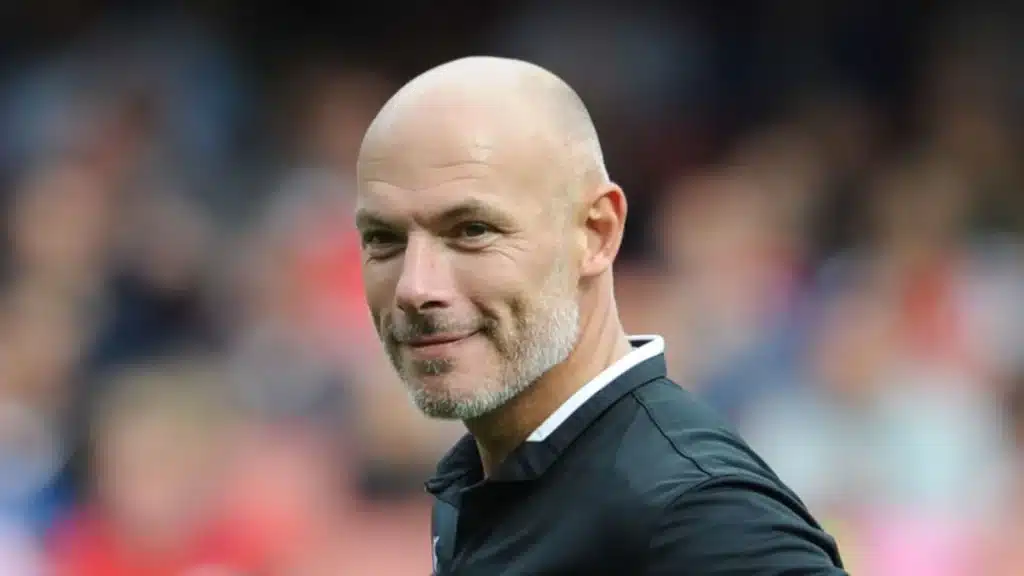
The Howard Webb Haaland VAR audio is set to provide the clearest explanation yet of how Manchester City’s controversial winning goal against Manchester United was allowed to stand.
Webb is expected to address the incident in the first Match Officials Mic’d Up programme of the 2026/27 season, with the referee and VAR communications surrounding Erling Haaland’s goal set to be made public. Pro Ref has already admitted that VAR made an error by failing to properly consider Enzo Fernandez’s involvement from an offside position and should have recommended an on-field review to referee Michael Oliver.
The audio now matters because we know what went wrong.
What we do not yet know is why Matt Donohue and the VAR team stopped their analysis after establishing that Haaland himself was onside.
That should be the central question Webb has to answer.
What will Howard Webb explain?
Reports say Webb will publicly address the Manchester derby decision on Tuesday through Match Officials Mic’d Up, the Premier League programme used to release referee and VAR conversations and explain major decisions.
The Premier League confirmed before the season that the programme would continue in 2026/27 and that selected incidents can include the full on-field and VAR audio, accompanied by Webb’s analysis.
That makes this more significant than another post-match statement.
The audio could reveal:
- what Donohue initially believed the offside issue was
- whether the VAR team discussed Enzo Fernandez at all
- whether Lisandro Martinez’s movement was considered
- whether the officials focused too heavily on whether Fernandez actually touched the ball
- why Michael Oliver was never advised to go to the monitor
- whether any disagreement occurred inside the VAR room
Until the audio is published, none of those points should be presented as fact.
What is already officially established is that the review process was incomplete.
What Pro Ref has already admitted
Haaland scored the only goal as Manchester City beat Manchester United 1-0 at Old Trafford.
The assistant referee initially ruled the goal out for offside.
VAR then established that Patrick Dorgu was playing Haaland onside and recommended that the goal be awarded.
That factual calculation was correct.
The problem was Fernandez.
The Manchester City midfielder was in an offside position and made an attempt to play the cross before it reached Haaland.
Pro Ref later acknowledged that VAR failed to properly recognise the likely impact of Fernandez’s position and should have recommended an on-field review. The organisation contacted Manchester United to acknowledge an “error of judgement.”
The VAR Verdict: ❌ Confirmed VAR process error
There is no longer any debate over whether the VAR procedure was handled correctly.
Pro Ref itself says it was not.
The remaining question is exactly how the officials arrived at the wrong process.
That is what the audio should help establish.
The key Law 11 question VAR missed
The central misunderstanding appears to concern a very important part of the offside Law.
A player does not have to touch the ball to commit an offside offence.
IFAB Law 11 says a player in an offside position can be penalised for interfering with an opponent by:
- challenging an opponent for the ball
- clearly attempting to play a nearby ball when that action impacts an opponent
- making an obvious action that clearly affects an opponent’s ability to play the ball
Those provisions apply even when the offside player never actually touches the ball.
That is why Fernandez’s lack of contact with the cross did not automatically make him irrelevant.
The question was whether his movement affected Martinez.
Why Lisandro Martinez mattered
Fernandez attacked the cross in front of Martinez.
Martinez reacted to that movement while Haaland arrived behind them.
That created a subjective offside question.
If Fernandez’s clear attempt to play the ball affected Martinez’s ability to defend the situation, Fernandez should have been penalised for interfering with an opponent.
IFAB provides examples where an offside-positioned attacker attempts to play a ball, does not touch it, but is still penalised because the action affects the defender or goalkeeper.
This is precisely why the officials needed to go beyond the question:
“Did Fernandez touch the ball?”
The more important question was:
“Did Fernandez’s action impact Martinez?”
Pro Ref’s post-match admission confirms that this subjective interference question was not handled properly.
Why Michael Oliver should have gone to the monitor
The distinction between factual and subjective offside decisions is critical.
Whether Haaland was physically in an offside position is factual.
Semi-automated offside technology and VAR could establish that without Michael Oliver needing to watch the replay.
Whether Fernandez interfered with Martinez, however, was subjective.
The current IFAB VAR Protocol specifically lists interference at offside as the type of subjective decision for which an on-field review is appropriate.
So the correct process should have been:
1. Was Haaland offside?
No.
2. Was Fernandez in an offside position?
Yes.
3. Did Fernandez attempt to play the ball?
Yes.
4. Did that action impact Martinez?
Subjective judgement required.
5. What should VAR do?
Recommend an on-field review.
6. Who makes the final decision?
Michael Oliver.
The final two steps never happened.
That is the procedural failure Webb now needs to explain.
What should we listen for in the VAR audio?
The most revealing part may not be the final words before the goal was awarded.
It could be the sequence of questions the VAR team asked themselves.
Did VAR identify Fernandez immediately?
If the audio shows Fernandez was noticed but quickly dismissed because he did not touch the ball, that would suggest a Law 11 interpretation failure.
Did VAR assess Martinez?
This is perhaps the most important question.
If the officials never discussed whether Fernandez affected Martinez, then the review missed the decisive subjective element entirely.
Did the AVAR raise concerns?
Blake Antrobus was Assistant VAR.
The released conversation could show whether the AVAR supported Donohue’s interpretation, questioned it or focused on another part of the offside check.
We should not assume the answer before hearing the recording.
Why was Oliver not invited to review?
Pro Ref has already said an on-field review should have been recommended.
Webb’s explanation should therefore establish why that did not happen.
That may be the most important lesson for future offside incidents.
Matt Donohue and Blake Antrobus have already been stood down
The consequences have already extended beyond an apology.
VAR Matt Donohue and Assistant VAR Blake Antrobus were not appointed for the following Premier League round.
Reuters reports that the decision was taken by Webb and the refereeing management team and that neither official is expected to return to Premier League duty until at least after the international break.
There has been no publicly announced fixed-length suspension.
The correct description is therefore that the officials have been stood down from appointments, rather than formally banned for a specified number of matches.
The release of the audio will now provide context for why the error was considered serious enough to produce an immediate performance-management consequence.
Was Michael Oliver responsible?
This is another issue the audio should clarify.
The evidence currently points primarily towards a VAR failure, not Michael Oliver personally deciding that Fernandez had not interfered.
Oliver’s on-field team initially had a no-goal decision.
VAR then established that Haaland was onside and advised that the goal could be awarded.
Oliver was never sent to the monitor to assess Fernandez’s involvement.
IFAB states that the referee remains the final decision-maker, but the VAR must recommend a review when the check indicates a probable clear and obvious error or serious missed incident.
In this case, Pro Ref says that recommendation should have happened.
The VAR Verdict: ❌ Primarily a VAR failure
Unless the released audio produces materially different information, the main procedural responsibility sits with Donohue’s video operation.
Oliver could not make a subjective judgement from the monitor if VAR never gave him the opportunity to review the incident.
This was not a technology failure
This point should not be lost when the audio is released.
Semi-automated offside technology did its job.
It correctly established that Haaland himself was onside.
The mistake came after that.
VAR had to combine the factual positional information with a human interpretation of Fernandez’s actions.
That human judgement failed.
Calling the incident a failure of “offside technology” would therefore be inaccurate.
It was a failure to correctly apply the offside Law after the technology had supplied the positional information.
What Match Officials Mic’d Up can tell us
The Premier League has expanded referee transparency for 2026/27.
It now publishes weekly Key Match Incidents Panel findings, while Match Officials Mic’d Up continues to release selected referee and VAR communications with Webb explaining the decision-making process.
Past editions have shown that the audio can reveal details that are impossible to identify from the television footage alone, including:
- what the referee actually saw
- which replay the VAR considered decisive
- how the VAR described the incident to the referee
- whether officials initially disagreed
- why a review was or was not recommended
For the Manchester derby incident, that context could be particularly important.
We already know the final decision was wrong.
The more valuable information now is how a professional VAR team arrived there.
Quick answers
Is Howard Webb releasing the Manchester derby VAR audio?
Yes, it is expected to be released and discussed through Match Officials Mic’d Up. Webb is set to address the Haaland goal controversy and the officials’ communication surrounding the decision.
Has the audio been released yet?
Not at the time of publication.
This article will be updated once the full conversation and Webb’s explanation are available.
What did VAR get wrong?
VAR correctly established that Haaland was onside but failed to properly assess whether offside-positioned Enzo Fernandez interfered with Lisandro Martinez.
Did Enzo Fernandez have to touch the ball to be offside?
No.
Law 11 allows an offside offence when a player clearly attempts to play a nearby ball and that action impacts an opponent.
Why should Michael Oliver have gone to the monitor?
Because Fernandez’s possible interference with Martinez was a subjective offside decision. IFAB’s VAR Protocol says subjective interference-at-offside situations are appropriate for an on-field review.
Were the VAR officials punished?
Matt Donohue and Blake Antrobus have been stood down from the next Premier League appointment cycle, with reports saying neither is expected back until after the international break. No fixed formal suspension has been announced.
Final VAR Verdict
Howard Webb’s explanation should finally answer the one major question left from the Manchester derby:
How did VAR correctly determine Haaland was onside but fail to complete the offside analysis?
Pro Ref has already acknowledged the result of that failure.
❌ Fernandez’s impact on Martinez was not properly assessed.
❌ Michael Oliver should have been sent to the monitor.
❌ VAR failed to complete the subjective part of the offside review.
✅ Semi-automated offside technology itself worked correctly.
Now the audio should reveal why that happened.
The most important thing to listen for will be whether Donohue and the VAR team discussed Fernandez’s effect on Martinez at all, or whether the review effectively ended once they established that Fernandez had not touched the ball.
That distinction will tell us whether this was primarily a communication breakdown, an incomplete review process or a fundamental misapplication of Law 11.
The VAR Verdict: the error is already confirmed. The audio should now explain the mechanism behind it.
This article will be updated when Howard Webb’s full explanation and the official Manchester derby VAR audio are released.

0 Comments
Join the conversation with respect. Comments are moderated and must follow our community rules.
Want to join the discussion?
Please log in or create an account to comment and reply. This keeps the conversation cleaner and safer.