
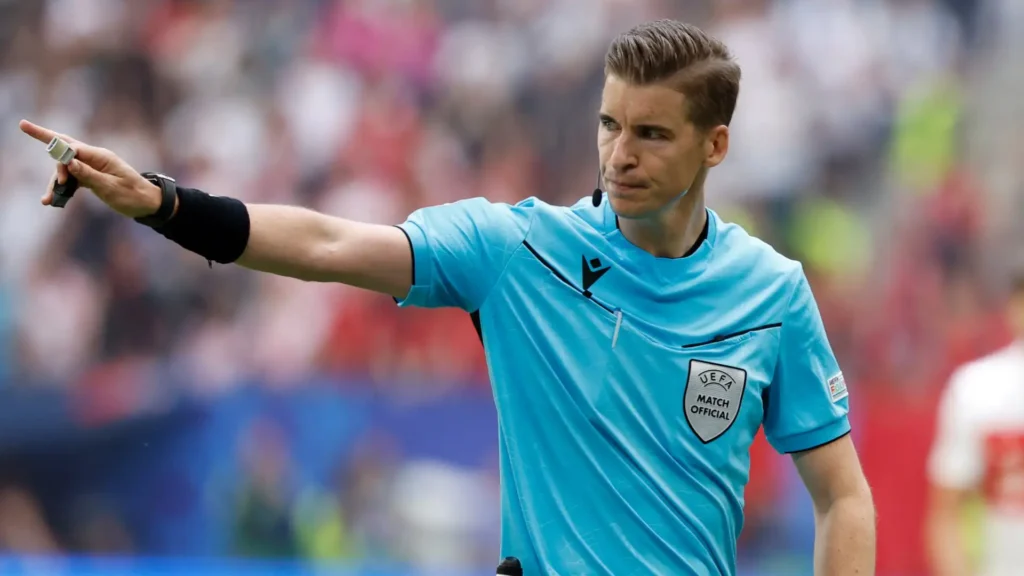
Argentina survived one of their biggest scares of the FIFA World Cup, fighting back from two goals down before eventually overcoming Egypt in a dramatic Round of 16 encounter. The football itself was outstanding, but from an officiating perspective, François Letexier was handed one of the tournament’s most demanding assignments.
For more than 90 minutes, the French referee allowed the game to flow and kept his cards in his pocket whenever possible. However, as emotions exploded in the closing stages, the match became increasingly difficult to control.
Early match management
Letexier adopted a calm approach from the opening whistle.
He allowed physical duels, spoke regularly with players and avoided unnecessary cautions during the first half. That approach suited the intensity of a World Cup knockout match and prevented repeated interruptions. There were several robust challenges that could have resulted in yellow cards under a stricter referee, but Letexier consistently applied the same threshold to both teams.
VAR disallows Egypt’s third goal
The biggest refereeing moment arrived in the second half. Egypt thought they had scored a third goal that would have put them firmly in control of the tie. However, VAR identified a foul by Marawan Attia on Lisandro Martínez during the build-up, well before the counterattack reached Argentina’s penalty area.
After reviewing the footage on the pitch-side monitor, Letexier correctly disallowed the goal. Some supporters questioned whether the foul occurred too far from goal to justify VAR intervention. Under the VAR Protocol, however, the entire attacking phase leading directly to a goal can be reviewed. Because the foul started the same attacking possession that ended with the ball in the net, VAR was fully entitled to intervene.
The VAR Verdict: Correct decision. The foul occurred during the attacking phase that led directly to the goal, making VAR intervention appropriate under FIFA’s protocol.
Letexier remained patient
One of Letexier’s strengths throughout the match was his communication. Instead of relying immediately on yellow cards, he repeatedly used verbal warnings and strong body language to calm players. For much of the match, that strategy worked well.
However, once Argentina completed their comeback and tensions rose dramatically in the closing minutes, emotions became increasingly difficult to manage.
Tempers boiled over after the final whistle
The final minutes produced the most chaotic scenes of the evening. Several players surrounded the referee after key decisions, while members of Egypt’s technical area repeatedly protested. The frustration continued after the final whistle, with multiple yellow cards shown for dissent and unsporting behaviour.
According to match reports, members of the Egyptian coaching staff were also dismissed after confrontations with the officiating team as emotions spilled over at the end of the match. From a refereeing perspective, these sanctions were justified.
The IFAB Laws of the Game clearly allow referees to caution or dismiss team officials who leave the technical area to protest aggressively, show dissent or behave irresponsibly.
The VAR Verdict: Letexier acted correctly by protecting both his authority and the integrity of the match once player and staff behaviour crossed the acceptable line.
Did Egypt cross the line?
Egypt’s performance throughout the match deserved praise, but their conduct in the closing stages was another matter. Repeated protests, confrontations with the referee and emotional reactions from the technical area created unnecessary pressure on the officiating team. While frustration after such a dramatic defeat is understandable, referees cannot allow prolonged dissent to go unpunished. By issuing late disciplinary sanctions, Letexier restored order before the situation escalated further.
Referee Rating
François Letexier – 8.8/10
This was far from an easy match to officiate.
The French referee correctly managed several difficult moments, communicated well throughout the game and handled the decisive VAR review with confidence. His disciplinary approach became firmer when the match demanded it, particularly during the heated conclusion.
he VAR Verdict
Argentina vs Egypt was one of the toughest refereeing assignments of the World Cup knockout stage. The disallowed Egyptian goal will generate debate, but under the VAR Protocol it was the correct outcome because the foul occurred during the same attacking phase that led directly to the goal. Letexier also showed good judgement by remaining patient for most of the contest before taking stronger disciplinary action when emotions finally boiled over.
The closing scenes were unfortunate, with Egypt’s bench and several players allowing frustration to overshadow an otherwise courageous performance. In those circumstances, the referee’s responsibility is to restore order, and François Letexier did exactly that.
For The VAR Verdict, this was another convincing performance from one of FIFA’s most trusted officials, reinforcing his credentials for an even bigger appointment later in the tournament.

0 Comments
Join the conversation with respect. Comments are moderated and must follow our community rules.
Want to join the discussion?
Please log in or create an account to comment and reply. This keeps the conversation cleaner and safer.