
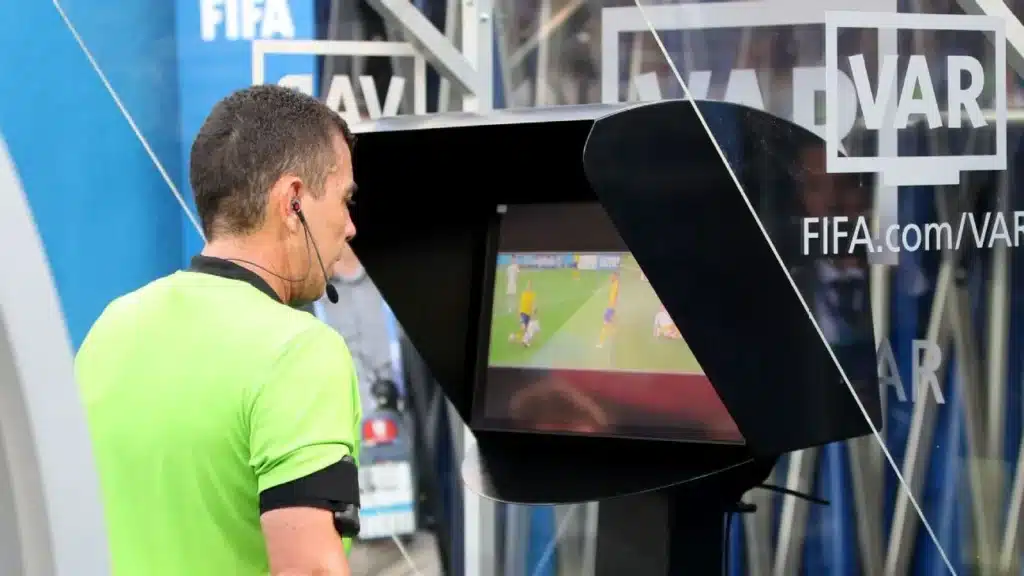
The Armenian VAR review show could become one of the most important transparency initiatives introduced by the Football Federation of Armenia in recent years.
The federation has launched a new YouTube series titled “VAR-ից հետո”, which can be translated as “After VAR.” According to the announcement, the most discussed and controversial incidents from each Armenian Premier League round will be analysed by Arman Alaberkian, head of the FFA’s Refereeing and Inspection Department.
The first episode reviews incidents from the opening round of the 2026/27 Armenian Premier League season.
At first sight, this may look like a simple YouTube programme. In reality, it has the potential to change how supporters, clubs and journalists understand refereeing decisions in Armenia.
Instead of allowing controversy to develop through social media clips, club statements and incomplete television angles, the federation now has an opportunity to explain what the referee saw, what VAR checked and why the final decision was reached.
That is a good development.
However, the long-term value of the programme will depend on whether the FFA is genuinely transparent or merely uses the show to defend every decision.
What is the Armenian VAR review show?
The programme is designed to examine the major refereeing incidents from each Armenian Premier League matchday.
Alaberkian is expected to explain controversial moments using the Laws of the Game and the VAR protocol rather than simply offering a personal opinion. The intention is to publish analysis after every round, giving supporters a regular official explanation of the league’s most debated decisions.
Possible subjects include:
- Penalty and no-penalty decisions
- Direct red cards
- Second-yellow dismissals
- Handball incidents
- Offside decisions
- Fouls before goals
- VAR interventions
- Situations where VAR correctly did not intervene
- Incorrect or missed decisions
This format is especially valuable because many supporters understand the final outcome but not the protocol behind it.
For example, a viewer may believe that VAR should intervene whenever the referee appears to be wrong. The actual protocol is narrower: VAR normally assists only for a clear and obvious error or a serious missed incident within recognised review categories.
An official review programme can explain that difference.
Is this a good move by the Football Federation of Armenia?
Yes.
Armenian football has often experienced disputes involving referees, clubs and the federation. In many cases, the public conversation develops without an authoritative technical explanation.
A club may claim that it was denied a penalty. Supporters may circulate a single slow-motion angle. Former players may offer conflicting opinions. The referee normally cannot respond publicly, and the controversy continues without a clear conclusion.
A regular programme can reduce that information gap.
It gives the federation an opportunity to explain:
- What the referee decided on the field
- What VAR was permitted to review
- Which camera angles were available
- Whether the intervention threshold was met
- Whether the final decision was correct
- Whether an error was made
That final point is the most important.
The programme will build trust only when the FFA is willing to say that an official decision was wrong.
Other countries already produce similar referee programmes
Armenia is not the first football nation to introduce this model.
Several leagues and football associations now publish regular videos explaining controversial incidents.
Scotland: The VAR Review
The Scottish Football Association launched The VAR Review in 2024.
The monthly programme features Scotland’s head of refereeing, Willie Collum, reviewing major decisions and discussing the reasoning behind them. Importantly, the programme includes matchday communication between the on-field referee and the VAR team.
That audio gives supporters more than the final explanation. It allows them to hear:
- What the referee initially saw
- Which replay the VAR considered important
- Why an on-field review was recommended
- How the officials reached the final decision
The Scottish model is one of the strongest examples Armenia could follow.
England: Match Officials Mic’d Up
The Premier League and its professional refereeing organisation produce Match Officials Mic’d Up.
The programme allows refereeing chief Howard Webb to review major Premier League incidents and explain the decision-making process. Selected conversations between referees and VAR officials are also released.
Episodes have covered:
- Disallowed goals
- Penalty appeals
- Serious-foul-play decisions
- DOGSO red cards
- Offside interference
- Situations where VAR did not intervene
The programme does not eliminate disagreement, but it gives supporters direct access to the official interpretation.
United States and Canada: Inside Video Review
The Professional Referee Organization, which manages officials in Major League Soccer and several other North American competitions, publishes Inside Video Review.
PRO’s video-review leadership examines incidents from MLS and the NWSL, explaining how VAR was used during the relevant matchday. The organisation also publishes Spanish-language versions under the title VAR a Fondo.
This is particularly useful because the episodes are frequent rather than limited to only the largest controversies.
France: Arbitrage, le débrief
The French Football Federation publishes referee analysis after Ligue 1 matchdays.
The FFF’s refereeing department reviews selected incidents, describes the original decision, explains the VAR process and states whether the final outcome was correct. In some cases, it openly says that an intervention was not expected or that the referee’s initial decision was a clear error.
That willingness to criticise incorrect decisions gives the French format credibility.
Netherlands: ARAG KNVB VAR Moment
The Dutch federation also operates a regular explanatory format.
The KNVB says that every round it provides a look behind the scenes at its replay centre and demonstrates how a VAR decision was reached.
The Netherlands has historically played an important role in VAR development, and its review content focuses heavily on education and protocol.
How Armenia compares with the leading examples
| Country | Programme | Frequency | Official explanations | Referee audio |
|---|---|---|---|---|
| Armenia | VAR-ից հետո | Planned after each round | Yes | Not yet confirmed |
| Scotland | The VAR Review | Monthly | Yes | Yes |
| England | Match Officials Mic’d Up | Regular episodes | Yes | Selected audio |
| USA/Canada | Inside Video Review | Frequently during season | Yes | Often included in video analysis |
| France | Arbitrage, le débrief | After Ligue 1 rounds | Yes | Not always |
| Netherlands | KNVB VAR Moment | Matchday-based | Yes | Selected behind-the-scenes material |
Armenia’s proposed round-by-round schedule is ambitious.
Publishing after every Premier League round could make the programme more regular than the Scottish and English formats. However, frequency alone will not make it successful.
The quality and honesty of the analysis will matter more than the number of episodes.
Why the show could improve trust in Armenian referees
Referees are often criticised for decisions that are technically correct but poorly understood.
A defender may touch the ball first and still commit a foul. A handball may look obvious in a frozen image but be legal when the complete movement is considered. A strong challenge may deserve yellow rather than red because it does not endanger the opponent’s safety.
Without explanation, these decisions can look inconsistent.
The programme can demonstrate that referees consider factors such as:
- The speed and force of a challenge
- Point and type of contact
- Control of the player’s body
- Direction of movement
- Position of the arm during handball incidents
- Whether contact caused the attacker’s fall
- The number and position of covering defenders
- Whether an offside player affected an opponent
- Whether the original decision was clearly wrong
This could also protect referees from unfair accusations.
When the decision is correct, the FFA can show why.
When it is wrong, the federation can acknowledge the mistake and explain how officials will learn from it.
Both outcomes improve credibility.
The danger: a programme that defends every referee
There is also a clear risk.
Some official referee-review programmes lose public trust because they appear designed to justify decisions rather than analyse them.
If every episode concludes that the referee and VAR were correct, supporters will quickly stop viewing the programme as independent analysis.
Football contains human judgement. Referees make mistakes. VAR officials also make mistakes.
A credible show must be prepared to use clear conclusions such as:
- Correct on-field decision
- Correct VAR intervention
- VAR correctly did not intervene
- On-field decision was incorrect
- VAR should have intervened
- VAR intervention was unnecessary
- Evidence was inconclusive
- Correct outcome but incorrect process
That language is more useful than vague phrases such as “the referee had a difficult decision.”
The FFA should release referee and VAR audio
The next major step should be the controlled release of communication between the referee and VAR.
Audio would allow supporters to understand the process rather than hearing only a post-match interpretation.
For example:
Referee: “I saw the defender play the ball first.”
VAR: “Checking possible penalty. The defender contacts the attacker’s leg before touching the ball.”
VAR: “I recommend an on-field review for a possible penalty.”
That conversation reveals why the intervention occurred.
Scotland and England have demonstrated that selected audio can be released without damaging referee authority.
The FFA would still need to protect sensitive communication, private information and material that could expose referees to unnecessary abuse. But selected audio from major incidents would significantly improve the programme.
The episodes must be published quickly
Timing will also be important.
An explanation released ten days after a match will have limited impact. By then, supporters will already have formed their conclusions, clubs may have published statements and misleading clips may have spread across social media.
The ideal schedule would be:
- Matches finish during the weekend
- Incidents are reviewed internally on Monday
- Programme is recorded on Monday or Tuesday
- Episode is published within 48 to 72 hours
This gives the refereeing department enough time to perform a proper technical analysis without allowing controversy to remain unanswered for too long.
Every major club should be treated equally
The selection of incidents must also be balanced.
The programme should not focus only on matches involving Noah, Pyunik, Ararat-Armenia or other leading clubs.
Decisions involving smaller teams can be equally important, especially in relegation battles or matches where television coverage is more limited.
The FFA should publish clear selection criteria, such as:
- All on-field VAR reviews
- All overturned decisions
- Major penalty controversies
- Direct-red-card incidents
- Incorrect second-yellow dismissals
- Decisions that generated formal club complaints
- Educational incidents involving unusual Laws
This would prevent accusations that the federation selects only convenient examples.
English subtitles would expand the audience
The programme should primarily remain in Armenian, but English subtitles would be valuable.
They would allow:
- UEFA officials to follow the project
- Foreign referees to study Armenian incidents
- International media to report on the league
- Foreign players and coaches in Armenia to understand decisions
- Armenian football to demonstrate transparency internationally
The North American PRO model already publishes material in English and Spanish, showing how multilingual referee education can reach a broader audience.
Short clips could also be published separately for Instagram, TikTok and Facebook.
A ten-minute full episode may attract dedicated supporters. A 45-second clip explaining one penalty decision could reach a much larger audience.
Could the programme create more controversy?
Possibly.
An official admission that VAR missed a penalty could anger the affected club or increase criticism of the referee.
However, avoiding explanations does not remove controversy. It simply allows others to control the story.
Transparency may create short-term discomfort, but it normally produces stronger long-term trust.
The federation should also avoid turning the show into public punishment of individual officials. The focus should remain on the decision and the Law, not on personally attacking the referee.
A useful explanation would say:
“The referee’s angle was blocked, but the available VAR footage showed a clear foul. An on-field review should have been recommended.”
It should not say:
“The referee performed badly and cost the team the match.”
The objective is accountability and education, not humiliation.
What the Armenian VAR review show needs to succeed
The FFA should follow several principles:
Admit mistakes clearly
The federation must be willing to state when referees or VAR officials were wrong.
Show multiple camera angles
A conclusion is more convincing when supporters can see the same evidence used by the officials.
Explain the relevant Law
Each incident should include the exact technical reason behind the decision.
Separate decision from protocol
A final outcome may be correct even when the VAR process was incorrect, and the reverse can also happen.
Release selected audio
Communication between the referee and VAR would make the programme significantly stronger.
Publish consistently
The show should continue throughout the season, not disappear after several difficult controversies.
Cover all clubs fairly
Incident selection should not depend on the size or influence of the teams involved.
Produce short social clips
Each major decision should have its own vertical video for social media.
The VAR Verdict
The launch of the Armenian VAR review show is an excellent idea and a meaningful step toward greater referee transparency.
Armenian football does not need to pretend that every decision is correct. It needs a system that explains correct decisions, acknowledges mistakes and shows supporters how the referee and VAR reached their conclusions.
Scotland, England, France, the Netherlands and North America have already demonstrated that official referee-review programmes can educate fans and improve understanding of the VAR process.
Armenia now has an opportunity to build its own version.
Our verdict: The FFA deserves credit for launching “VAR-ից հետո.” A round-by-round review can improve trust, protect referees from inaccurate criticism and give clubs clearer explanations.
But the programme will be judged by one question:
Will the federation openly admit when its officials are wrong?
If the answer is yes, this could become one of the strongest refereeing initiatives in Armenian football.
If every controversial decision is defended, the programme will quickly be viewed as federation public relations rather than genuine analysis.
The strongest future version should include official camera angles, selected referee-VAR audio, clear correct-or-incorrect verdicts, English subtitles and publication within several days of each round.
Transparency does not require perfect refereeing.
It requires honest explanations when refereeing is not perfect.

0 Comments
Join the conversation with respect. Comments are moderated and must follow our community rules.
Want to join the discussion?
Please log in or create an account to comment and reply. This keeps the conversation cleaner and safer.